I resolved to know nothing while I was with you except Jesus Christ, and him crucified -- St. Paul, I Corinthians 2:2
Saturday, October 06, 2012
Our Lady of Victory (Homily)
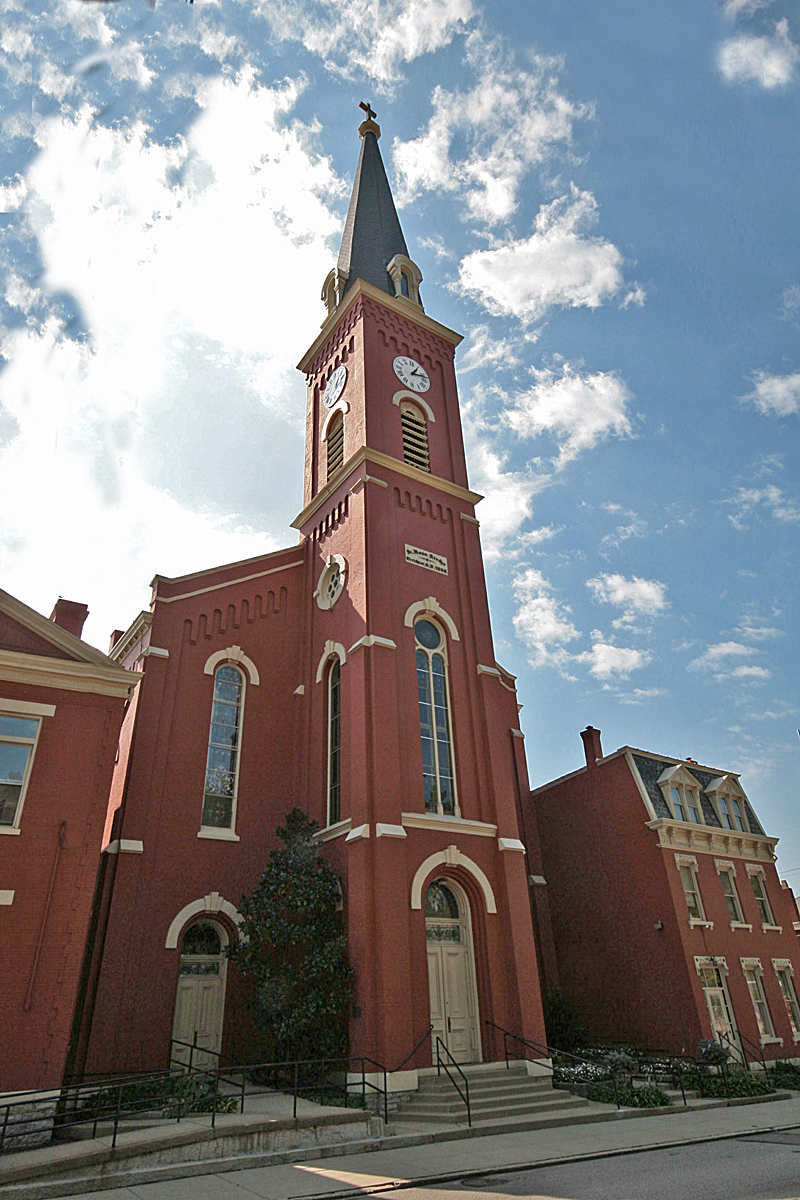
Tonight I offered Mass at Our Lady of Victory Parish on the west side of Cincinnati. As tomorrow is the Feast of Our Lady of the Rosary (the newer name), it is a feast for the parish, superseding the Sunday observed by everyone else. That means different readings as well.
In short, my friend the pastor snookered me into having two homilies to write for this weekend!
Oh well, it gave me a the privilege of preaching about this noteworthy feast. Here's the homily I gave tonight. (I'll be there again at 8 am tomorrow, then back to Saint Rose for 10:30 am Mass.)
What is this feast we celebrate today?
This involves a trip into history.
If you remember the Bulwinkle cartoon,
they had a “Wayback machine.” Let’s step in!
We go back to the year 1571, 431 years ago.
Not only did our nation not exist, the first settlement—
at St. Augustine, Florida, wouldn’t happen for another 11 years.
But Europe, Africa, Asia and the Middle East
were embroiled in what might, in later years,
have been termed a “world” war.
At the center of the war was the superpower of the day,
the Muslim, Ottoman Empire, which was expanding
at the expense of Christian nations
of north Africa, the Middle East and Europe.
The Ottoman Empire, at this time,
Dominated the Middle East, North Africa,
and already owned a huge chunk of Europe--
and was preparing to gobble up another big bite:
most likely Italy and Germany.
With its navy holding sway over the Mediterranean Sea,
it seemed nothing could stop them.
That is why Pope Saint Pius V felt it necessary
to join with as many Christian princes of Europe
to form a “Holy League” to defeat the menace.
By the way, if you are interested
in reading more about these times,
may I suggest you check out Louis de Wohl,
who wrote two books about the battle,
and the hero, Don John of Austria.
De Wohl wrote dozens of such books,
and they are terrific fun to read,
all about heroes and battles and great moments in history.
In our day, when we send off our armed forces,
the President will give a speech to Congress.
Then, the pope made various entreaties to the people of Europe,
asking them to make holy hours, and to recite the Rosary.
The morning of October 7, the pope himself
was praying the rosary in the basilica of Saint Mary.
What he did not know—could not know—
was that the Christian fleet, hundreds of miles away,
had engaged the Turkish navy in battle,
off the coast of Greece, in the Gulf of Lepanto.
This was the Battle of Lepanto,
and it happened on this very day.
The Christian forces prevailed;
and by a miracle, Pope Pius, far away in Rome, knew it instantly.
In gratitude to our Lady,
he declared this day “Our Lady of Victory”—
which later was changed to Our Lady of the Rosary.
But if you know anyone who has played football,
they like that title, “Our Lady of Victory.”
The readings are all about victory—
the victory the Lord won, for us, over sin and hell.
The first defeat came in the Garden, so long ago.
When the time was right, God sent Gabriel to Mary,
to ask her help—just as Pius V asked her help, 1,500 years later.
Whenever we ask Mary’s help, she always says “yes.”
Today we face some battles every bit as intimidating
as what Don John and his forces faced at Lepanto.
Make of it what you will, but Christians still face persecution
at the hands of militants acting under the banner of Islam.
Meanwhile, we face increasing opposition
under the banner of secularism
and even, bizarrely, “freedom.”
The “freedom” to destroy an unborn child
and the so-called “freedom” to force Catholic institutions
to pay for contraceptives,
despite that violating our religious liberty.
In Pope Pius’s time, many said that Islam’s victory was inevitable;
his crusade was foolish; he was fighting the inexorable hand of history.
They were wrong;
they didn’t reckon on the power of Our Lady’s intercession
to turn the course of history.
The same thing happened in the 20th century, when at Fatima,
Mary asked the world to pray the Rosary to convert Russia.
People, not so long ago,
said communism was the wave of the future,
there was no stopping it.
The Rosary stopped it—without firing a missile.
Whatever battles we face today—
whether in our society or in our own lives—
we will hear the same voices, telling us to give up.
Yet we have the same weapon, Mary’s Rosary.
And she will win the Victory!
Wednesday, October 03, 2012
Lepanto
Sunday is the Feast of Our Lady of the Rosary, aka Our Lady of Victory, commemorating the Battle of Lepanto in AD 1571. In anticipation of that, here is G.K. Chesterton's stirring poem about that battle.
White founts falling in the Courts of the sun,
And the Soldan of Byzantium is smiling as they run;
There is laughter like the fountains in that face of all men feared,
It stirs the forest darkness, the darkness of his beard;
It curls the blood-red crescent, the crescent of his lips;
For the inmost sea of all the earth is shaken with his ships.
They have dared the white republics up the capes of Italy,
They have dashed the Adriatic round the Lion of the Sea,
And the Pope has cast his arms abroad for agony and loss,
And called the kings of Christendom for swords about the Cross.
The cold queen of England is looking in the glass;
The shadow of the Valois is yawning at the Mass;
From evening isles fantastical rings faint the Spanish gun,
And the Lord upon the Golden Horn is laughing in the sun.
Dim drums throbbing, in the hills half heard,
Where only on a nameless throne a crownless prince has stirred,
Where, risen from a doubtful seat and half attainted stall,
The last knight of Europe takes weapons from the wall,
The last and lingering troubadour to whom the bird has sung,
That once went singing southward when all the world was young.
In that enormous silence, tiny and unafraid,
Comes up along a winding road the noise of the Crusade.
Strong gongs groaning as the guns boom far,
Don John of Austria is going to the war,
Stiff flags straining in the night-blasts cold
In the gloom black-purple, in the glint old-gold,
Torchlight crimson on the copper kettle-drums,
Then the tuckets, then the trumpets, then the cannon, and he comes.
Don John laughing in the brave beard curled,
Spurning of his stirrups like the thrones of all the world,
Holding his head up for a flag of all the free.
Love-light of Spain--hurrah!
Death-light of Africa!
Don John of Austria
Is riding to the sea.
Mahound is in his paradise above the evening star,
(Don John of Austria is going to the war.)
He moves a mighty turban on the timeless houri's knees,
His turban that is woven of the sunsets and the seas.
He shakes the peacock gardens as he rises from his ease,
And he strides among the tree-tops and is taller than the trees;
And his voice through all the garden is a thunder sent to bring
Black Azrael and Ariel and Ammon on the wing.
Giants and the Genii,
Multiplex of wing and eye,
Whose strong obedience broke the sky
When Solomon was king.
They rush in red and purple from the red clouds of the morn,
From the temples where the yellow gods shut up their eyes in scorn;
They rise in green robes roaring from the green hells of the sea
Where fallen skies and evil hues and eyeless creatures be,
On them the sea-valves cluster and the grey sea-forests curl,
Splashed with a splendid sickness, the sickness of the pearl;
They swell in sapphire smoke out of the blue cracks of the ground,--
They gather and they wonder and give worship to Mahound.
And he saith, "Break up the mountains where the hermit-folk can hide,
And sift the red and silver sands lest bone of saint abide,
And chase the Giaours flying night and day, not giving rest,
For that which was our trouble comes again out of the west.
We have set the seal of Solomon on all things under sun,
Of knowledge and of sorrow and endurance of things done.
But a noise is in the mountains, in the mountains, and I know
The voice that shook our palaces--four hundred years ago:
It is he that saith not 'Kismet'; it is he that knows not Fate;
It is Richard, it is Raymond, it is Godfrey at the gate!
It is he whose loss is laughter when he counts the wager worth,
Put down your feet upon him, that our peace be on the earth."
For he heard drums groaning and he heard guns jar,
(Don John of Austria is going to the war.)
Sudden and still--hurrah!
Bolt from Iberia!
Don John of Austria
Is gone by Alcalar.
St. Michaels on his Mountain in the sea-roads of the north
(Don John of Austria is girt and going forth.)
Where the grey seas glitter and the sharp tides shift
And the sea-folk labour and the red sails lift.
He shakes his lance of iron and he claps his wings of stone;
The noise is gone through Normandy; the noise is gone alone;
The North is full of tangled things and texts and aching eyes,
And dead is all the innocence of anger and surprise,
And Christian killeth Christian in a narrow dusty room,
And Christian dreadeth Christ that hath a newer face of doom,
And Christian hateth Mary that God kissed in Galilee,--
But Don John of Austria is riding to the sea.
Don John calling through the blast and the eclipse
Crying with the trumpet, with the trumpet of his lips,
Trumpet that sayeth ha!
Domino gloria!
Don John of Austria
Is shouting to the ships.
King Philip's in his closet with the Fleece about his neck
(Don John of Austria is armed upon the deck.)
The walls are hung with velvet that is black and soft as sin,
And little dwarfs creep out of it and little dwarfs creep in.
He holds a crystal phial that has colours like the moon,
He touches, and it tingles, and he trembles very soon,
And his face is as a fungus of a leprous white and grey
Like plants in the high houses that are shuttered from the day,
And death is in the phial and the end of noble work,
But Don John of Austria has fired upon the Turk.
Don John's hunting, and his hounds have bayed--
Booms away past Italy the rumour of his raid.
Gun upon gun, ha! ha!
Gun upon gun, hurrah!
Don John of Austria
Has loosed the cannonade.
The Pope was in his chapel before day or battle broke,
(Don John of Austria is hidden in the smoke.)
The hidden room in man's house where God sits all the year,
The secret window whence the world looks small and very dear.
He sees as in a mirror on the monstrous twilight sea
The crescent of his cruel ships whose name is mystery;
They fling great shadows foe-wards, making Cross and Castle dark,
They veil the plumèd lions on the galleys of St. Mark;
And above the ships are palaces of brown, black-bearded chiefs,
And below the ships are prisons, where with multitudinous griefs,
Christian captives sick and sunless, all a labouring race repines
Like a race in sunken cities, like a nation in the mines.
They are lost like slaves that sweat, and in the skies of morning hung
The stair-ways of the tallest gods when tyranny was young.
They are countless, voiceless, hopeless as those fallen or fleeing on
Before the high Kings' horses in the granite of Babylon.
And many a one grows witless in his quiet room in hell
Where a yellow face looks inward through the lattice of his cell,
And he finds his God forgotten, and he seeks no more a sign--
(But Don John of Austria has burst the battle-line!)
Don John pounding from the slaughter-painted poop,
Purpling all the ocean like a bloody pirate's sloop,
Scarlet running over on the silvers and the golds,
Breaking of the hatches up and bursting of the holds,
Thronging of the thousands up that labour under sea
White for bliss and blind for sun and stunned for liberty.
Vivat Hispania!
Domino Gloria!
Don John of Austria
Has set his people free!
Cervantes on his galley sets the sword back in the sheath
(Don John of Austria rides homeward with a wreath.)
And he sees across a weary land a straggling road in Spain,
Up which a lean and foolish knight for ever rides in vain,
And he smiles, but not as Sultans smile, and settles back the blade....
(But Don John of Austria rides home from the Crusade.)
White founts falling in the Courts of the sun,
And the Soldan of Byzantium is smiling as they run;
There is laughter like the fountains in that face of all men feared,
It stirs the forest darkness, the darkness of his beard;
It curls the blood-red crescent, the crescent of his lips;
For the inmost sea of all the earth is shaken with his ships.
They have dared the white republics up the capes of Italy,
They have dashed the Adriatic round the Lion of the Sea,
And the Pope has cast his arms abroad for agony and loss,
And called the kings of Christendom for swords about the Cross.
The cold queen of England is looking in the glass;
The shadow of the Valois is yawning at the Mass;
From evening isles fantastical rings faint the Spanish gun,
And the Lord upon the Golden Horn is laughing in the sun.
Dim drums throbbing, in the hills half heard,
Where only on a nameless throne a crownless prince has stirred,
Where, risen from a doubtful seat and half attainted stall,
The last knight of Europe takes weapons from the wall,
The last and lingering troubadour to whom the bird has sung,
That once went singing southward when all the world was young.
In that enormous silence, tiny and unafraid,
Comes up along a winding road the noise of the Crusade.
Strong gongs groaning as the guns boom far,
Don John of Austria is going to the war,
Stiff flags straining in the night-blasts cold
In the gloom black-purple, in the glint old-gold,
Torchlight crimson on the copper kettle-drums,
Then the tuckets, then the trumpets, then the cannon, and he comes.
Don John laughing in the brave beard curled,
Spurning of his stirrups like the thrones of all the world,
Holding his head up for a flag of all the free.
Love-light of Spain--hurrah!
Death-light of Africa!
Don John of Austria
Is riding to the sea.
Mahound is in his paradise above the evening star,
(Don John of Austria is going to the war.)
He moves a mighty turban on the timeless houri's knees,
His turban that is woven of the sunsets and the seas.
He shakes the peacock gardens as he rises from his ease,
And he strides among the tree-tops and is taller than the trees;
And his voice through all the garden is a thunder sent to bring
Black Azrael and Ariel and Ammon on the wing.
Giants and the Genii,
Multiplex of wing and eye,
Whose strong obedience broke the sky
When Solomon was king.
They rush in red and purple from the red clouds of the morn,
From the temples where the yellow gods shut up their eyes in scorn;
They rise in green robes roaring from the green hells of the sea
Where fallen skies and evil hues and eyeless creatures be,
On them the sea-valves cluster and the grey sea-forests curl,
Splashed with a splendid sickness, the sickness of the pearl;
They swell in sapphire smoke out of the blue cracks of the ground,--
They gather and they wonder and give worship to Mahound.
And he saith, "Break up the mountains where the hermit-folk can hide,
And sift the red and silver sands lest bone of saint abide,
And chase the Giaours flying night and day, not giving rest,
For that which was our trouble comes again out of the west.
We have set the seal of Solomon on all things under sun,
Of knowledge and of sorrow and endurance of things done.
But a noise is in the mountains, in the mountains, and I know
The voice that shook our palaces--four hundred years ago:
It is he that saith not 'Kismet'; it is he that knows not Fate;
It is Richard, it is Raymond, it is Godfrey at the gate!
It is he whose loss is laughter when he counts the wager worth,
Put down your feet upon him, that our peace be on the earth."
For he heard drums groaning and he heard guns jar,
(Don John of Austria is going to the war.)
Sudden and still--hurrah!
Bolt from Iberia!
Don John of Austria
Is gone by Alcalar.
St. Michaels on his Mountain in the sea-roads of the north
(Don John of Austria is girt and going forth.)
Where the grey seas glitter and the sharp tides shift
And the sea-folk labour and the red sails lift.
He shakes his lance of iron and he claps his wings of stone;
The noise is gone through Normandy; the noise is gone alone;
The North is full of tangled things and texts and aching eyes,
And dead is all the innocence of anger and surprise,
And Christian killeth Christian in a narrow dusty room,
And Christian dreadeth Christ that hath a newer face of doom,
And Christian hateth Mary that God kissed in Galilee,--
But Don John of Austria is riding to the sea.
Don John calling through the blast and the eclipse
Crying with the trumpet, with the trumpet of his lips,
Trumpet that sayeth ha!
Domino gloria!
Don John of Austria
Is shouting to the ships.
King Philip's in his closet with the Fleece about his neck
(Don John of Austria is armed upon the deck.)
The walls are hung with velvet that is black and soft as sin,
And little dwarfs creep out of it and little dwarfs creep in.
He holds a crystal phial that has colours like the moon,
He touches, and it tingles, and he trembles very soon,
And his face is as a fungus of a leprous white and grey
Like plants in the high houses that are shuttered from the day,
And death is in the phial and the end of noble work,
But Don John of Austria has fired upon the Turk.
Don John's hunting, and his hounds have bayed--
Booms away past Italy the rumour of his raid.
Gun upon gun, ha! ha!
Gun upon gun, hurrah!
Don John of Austria
Has loosed the cannonade.
The Pope was in his chapel before day or battle broke,
(Don John of Austria is hidden in the smoke.)
The hidden room in man's house where God sits all the year,
The secret window whence the world looks small and very dear.
He sees as in a mirror on the monstrous twilight sea
The crescent of his cruel ships whose name is mystery;
They fling great shadows foe-wards, making Cross and Castle dark,
They veil the plumèd lions on the galleys of St. Mark;
And above the ships are palaces of brown, black-bearded chiefs,
And below the ships are prisons, where with multitudinous griefs,
Christian captives sick and sunless, all a labouring race repines
Like a race in sunken cities, like a nation in the mines.
They are lost like slaves that sweat, and in the skies of morning hung
The stair-ways of the tallest gods when tyranny was young.
They are countless, voiceless, hopeless as those fallen or fleeing on
Before the high Kings' horses in the granite of Babylon.
And many a one grows witless in his quiet room in hell
Where a yellow face looks inward through the lattice of his cell,
And he finds his God forgotten, and he seeks no more a sign--
(But Don John of Austria has burst the battle-line!)
Don John pounding from the slaughter-painted poop,
Purpling all the ocean like a bloody pirate's sloop,
Scarlet running over on the silvers and the golds,
Breaking of the hatches up and bursting of the holds,
Thronging of the thousands up that labour under sea
White for bliss and blind for sun and stunned for liberty.
Vivat Hispania!
Domino Gloria!
Don John of Austria
Has set his people free!
Cervantes on his galley sets the sword back in the sheath
(Don John of Austria rides homeward with a wreath.)
And he sees across a weary land a straggling road in Spain,
Up which a lean and foolish knight for ever rides in vain,
And he smiles, but not as Sultans smile, and settles back the blade....
(But Don John of Austria rides home from the Crusade.)
Sunday, September 30, 2012
Preaching about how to dress at Mass
What do you think of this approach?
Do you consider this a "gimmick"? Do you object? Let me know what you think.
Cross-posted at Heart of Christ.
(Biretta-tip to Over the Rhine and Into the Tiber, where I saw this.)
Do you consider this a "gimmick"? Do you object? Let me know what you think.
Cross-posted at Heart of Christ.
(Biretta-tip to Over the Rhine and Into the Tiber, where I saw this.)
Saturday, September 29, 2012
Free money! Come and get it! (Sunday homily)
Let’s talk about money:
the thing we all work for, the thing that buys us what we need.
In this country, we have the dollar. In Europe, it’s the euro;
in Mexico, it’s the peso.
What about heaven? What money do they use there?
Grace.
You might say, wait a minute, grace isn’t money. Grace is free!
Yes; but just as it takes money to buy the things we need,
just as we store up money to have security in this world,
it is grace that gives us security in eternity.
And it’s isn’t true to say, grace is free.
It’s free to us--but it came at a great cost.
Our Lord went to the Cross,
which he makes present for us in every Mass.
Every Mass we are confronted with the true price of grace.
He paid the price of our admission.
Grace is our golden ticket to heaven. Do we have it?
Or have we lost it, traded it away?
That’s what we do when we sin.
We trade the gold of God’s grace
for some cheap thrill on the Internet,
or the cold satisfaction of an act of revenge,
or for the false security of a lie.
And as we heard in the Gospel, hell is real.
It’s not a good place.
We don’t want to go there, or help anyone else end up there.
But I’ve good news!
When we trade the gold of heaven for a worthless sin,
there way to make an exchange. That’s what confession is!
If you go to Macy's for a 90% off sale, there's a catch: no returns!
That's why they give you the discount--they don't want that junk back!
But we have a better deal.*
In churches all over downtown and around the area, at various times,
a priest is here waiting for you.
At Saint Rose, it’s every Friday and Saturday at 11 am.
At the Cathedral--listen to this--
you can come after the 7 am Mass on weekdays,
and again at noon to 12:30 pm, and again at 4:30 to 5;
and on Saturdays, noon to 3!
Bring all that worthless stuff here!
Get a full measure of God’s grace, the gold of heaven!
Moses said, oh that God would bestow his Spirit on them all!
He does! Come and getit and get you some!*
* Added extemporaneously.
the thing we all work for, the thing that buys us what we need.
In this country, we have the dollar. In Europe, it’s the euro;
in Mexico, it’s the peso.
What about heaven? What money do they use there?
Grace.
You might say, wait a minute, grace isn’t money. Grace is free!
Yes; but just as it takes money to buy the things we need,
just as we store up money to have security in this world,
it is grace that gives us security in eternity.
And it’s isn’t true to say, grace is free.
It’s free to us--but it came at a great cost.
Our Lord went to the Cross,
which he makes present for us in every Mass.
Every Mass we are confronted with the true price of grace.
He paid the price of our admission.
Grace is our golden ticket to heaven. Do we have it?
Or have we lost it, traded it away?
That’s what we do when we sin.
We trade the gold of God’s grace
for some cheap thrill on the Internet,
or the cold satisfaction of an act of revenge,
or for the false security of a lie.
And as we heard in the Gospel, hell is real.
It’s not a good place.
We don’t want to go there, or help anyone else end up there.
But I’ve good news!
When we trade the gold of heaven for a worthless sin,
there way to make an exchange. That’s what confession is!
If you go to Macy's for a 90% off sale, there's a catch: no returns!
That's why they give you the discount--they don't want that junk back!
But we have a better deal.*
In churches all over downtown and around the area, at various times,
a priest is here waiting for you.
At Saint Rose, it’s every Friday and Saturday at 11 am.
At the Cathedral--listen to this--
you can come after the 7 am Mass on weekdays,
and again at noon to 12:30 pm, and again at 4:30 to 5;
and on Saturdays, noon to 3!
Bring all that worthless stuff here!
Get a full measure of God’s grace, the gold of heaven!
Moses said, oh that God would bestow his Spirit on them all!
He does! Come and get
* Added extemporaneously.
Tuesday, September 25, 2012
Prayers for and with our Jewish elder siblings...
Tonight begins the most solemn time for the Jewish People: Yom Kippur, the day of atonement.
I meant to post something earlier, but didn't get home till just now.
I don't know how many Jewish believers read this blog, but to those who do: a blessed Yom Kippur!
The rest of us would do well to reflect on:
1) The uncountable debt we owe the Jews. God chose them to know his Name, to enter into covenant with him, and be--as Isaiah said--a "light to the nations."
2) This is the day each year when the high priest would offer sacrifice to atone for the people. Those of us who are Christians, of course, think of our Lord Jesus Christ. We need the very same mercy; and the cost paid by our Lord was awful. We can never give enough reflection to what the Cross really means.
3) We Christians must always remember what Saint Paul said in his letter to the Romans: that the role of God's Chosen People in the plan of salvation remains incomplete. God's plan is bigger and more profound than we can possibly imagine. Never dare to think that God would forget his covenant or reject his chosen!
4) We Christians have a duty to consider the special repentance that we owe for the sins committed, in the Lord's name, against his own people, by Christians. The history is more complex, not so cut-and-dried, as some would suggest--for example, there is an inspiring history of the popes being very solicitous and just toward the Jews of Italy, and much of the hostility to the Jews was inspired not so much by Christianity as by the vices Christianity opposes.
And yet, how can it not break ones heart to consider that our Jewish elder brothers and sisters would see the Cross, and the name of our Lord, as instruments of oppression? And how did this happen?
It happened because of what Christians did.
So maybe on Yom Kippur, we might do well to pray for mercy too.
I meant to post something earlier, but didn't get home till just now.
I don't know how many Jewish believers read this blog, but to those who do: a blessed Yom Kippur!
The rest of us would do well to reflect on:
1) The uncountable debt we owe the Jews. God chose them to know his Name, to enter into covenant with him, and be--as Isaiah said--a "light to the nations."
2) This is the day each year when the high priest would offer sacrifice to atone for the people. Those of us who are Christians, of course, think of our Lord Jesus Christ. We need the very same mercy; and the cost paid by our Lord was awful. We can never give enough reflection to what the Cross really means.
3) We Christians must always remember what Saint Paul said in his letter to the Romans: that the role of God's Chosen People in the plan of salvation remains incomplete. God's plan is bigger and more profound than we can possibly imagine. Never dare to think that God would forget his covenant or reject his chosen!
4) We Christians have a duty to consider the special repentance that we owe for the sins committed, in the Lord's name, against his own people, by Christians. The history is more complex, not so cut-and-dried, as some would suggest--for example, there is an inspiring history of the popes being very solicitous and just toward the Jews of Italy, and much of the hostility to the Jews was inspired not so much by Christianity as by the vices Christianity opposes.
And yet, how can it not break ones heart to consider that our Jewish elder brothers and sisters would see the Cross, and the name of our Lord, as instruments of oppression? And how did this happen?
It happened because of what Christians did.
So maybe on Yom Kippur, we might do well to pray for mercy too.
Let's go to Fatima & Lourdes!
I'm leading a pilgrimage, first time!
In association with the Holy Spirit Center, we're going to Fatima, Lourdes and Barcelona next April.
Here's the link for what you need to know.
In association with the Holy Spirit Center, we're going to Fatima, Lourdes and Barcelona next April.
Here's the link for what you need to know.
Sunday, September 23, 2012
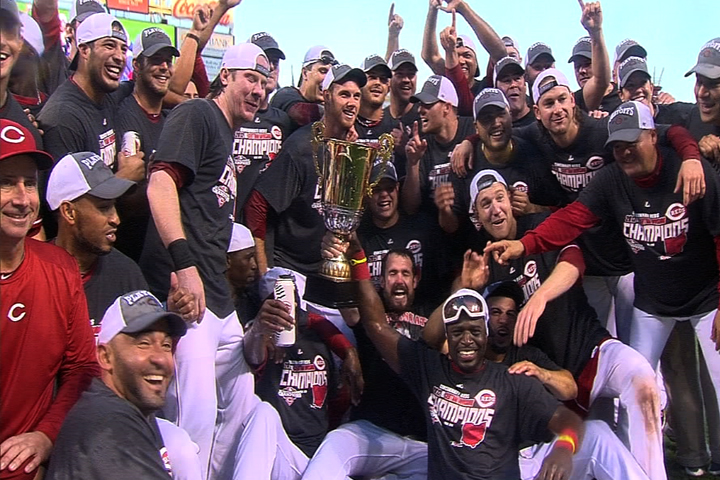
Reds Clinch Central! I was there.
I didn't decide to go to the game until yesterday; and I was thinking the game was at seven, so my initial plan was to go down earlier, get something to eat at Oktoberfest, and saunter down to the game. Father W., our pastor, stopped in around 2:30 pm--he had two weddings yesterday afternoon at Saint Rose, and was in the rectory between them--and he said he thought the game was at 4 pm. So it was! So I left here around 3 pm, and after hunting for parking, got to the park as our team came onto the field.
I knew one of our other priests was at the game, with some friends, so I called him on the way down to see if we could meet up. Thanks to the kindness of a generous layman, Father and his friends were in a prime location, in the field seats along first base. I was planning on standing-room-only if I couldn't get a ticket off a scalper for a reasonable price; in the end, I got a level-100 seat for $35, out in the outfield. So I met up with Father and his friends as the game began. He said there were four open seats next to him; I figured I'd sit there for a bit before the owners of those seats showed up. Well, only two of them--a couple of young kids, whose family was seated somewhere nearby (judging by trips back and forth). So I had a great seat for a great game.
All the years I've lived in Cincinnati, I've never been to a game when they clinched the title. It was a full house, which makes it fun; and winning helps! That said, I was at a few games this season, and it was disappointing to see the place less than full, when we have such a good team and a winning season.
I realize a lot of folks figure it's terribly expensive to go to a game, but here's something I suspect many don't realize. Did you know you can bring your own food and drinks to the ballpark? No, you can't bring glass bottles or metal cans--and no alcohol--but you can bring food, even a soft-sided cooler, and drinks in sealed, clear-plastic bottles.
The cheapest seats at Great American are $5. So with four kids and two adults that's $30 plus tax. Then you bring a cooler and drinks if you don't want to spend a lot on the concessions. There's $5 parking if you don't mind walking a few blocks; and you can get free street parking if you know where and when to look. Parents, you tell me: compared with what other things cost--such as movies or amusement parks--how does that stack up?
Let me also say this: I think our Reds have done a very good job over the years fostering a family atmosphere. Of course, you will always have some joker who drinks too much or gets too loud, but even when there are fans of the opposing team, our fans seem to keep their good humor. And the management does make it clear, from the get-go, that if anyone is crude or offensive, the ushers will deal with it if prompted. My sense is that the Reds want families to feel welcome.
So the game builds toward the climax; the strikeouts are being racked up (if they get 11, all those in attendance can use their ticket to claim free pizza at LaRosas and ice cream at UDF!), and Father B., sitting next to me--as we passed around the peanuts he brought with him--is wondering if Lato will stay in for the full game. He was pitching a great game, no runs so far; it would be nice to see him finish the game. When the home team got a nice rally going in the eighth, I wondered if the coach would just leave Lato in, since we had a good lead; but he pulled him for a pinch-hitter in hopes of sustaining the rally.
When the bottom of the eighth ended, everyone was on his feet cheering the home team, as they now took the field for--we hoped--the final three outs. Here comes Aroldis, the "Cuban Missile" to close it out! Everyone stayed standing for the final three, and with the final out, the whole team rushed the field. The Dodgers in the visitors' bullpen had to trudge past; rough for them, but they can still make the post-season as a wild-card.
We hung out a bit as the players hugged and jumped on each other; when they cleared the field, we headed over to one of the new places near the park, Toby Keiths, where a whole bunch of other fans flooded in after us. Have you noticed, Reds fans, that in the past few weeks folks at the game have taken to letting out howls? There was a bit of that at TKS as the six of us--another of Father B.'s friends joined us after the game--had some fun conversation and of course something to eat and to drink.
When the band came on around 10, we were ready to go. And I never did make it to Oktoberfest! But what a great day for the home team.
Go Reds!
I knew one of our other priests was at the game, with some friends, so I called him on the way down to see if we could meet up. Thanks to the kindness of a generous layman, Father and his friends were in a prime location, in the field seats along first base. I was planning on standing-room-only if I couldn't get a ticket off a scalper for a reasonable price; in the end, I got a level-100 seat for $35, out in the outfield. So I met up with Father and his friends as the game began. He said there were four open seats next to him; I figured I'd sit there for a bit before the owners of those seats showed up. Well, only two of them--a couple of young kids, whose family was seated somewhere nearby (judging by trips back and forth). So I had a great seat for a great game.
All the years I've lived in Cincinnati, I've never been to a game when they clinched the title. It was a full house, which makes it fun; and winning helps! That said, I was at a few games this season, and it was disappointing to see the place less than full, when we have such a good team and a winning season.
I realize a lot of folks figure it's terribly expensive to go to a game, but here's something I suspect many don't realize. Did you know you can bring your own food and drinks to the ballpark? No, you can't bring glass bottles or metal cans--and no alcohol--but you can bring food, even a soft-sided cooler, and drinks in sealed, clear-plastic bottles.
The cheapest seats at Great American are $5. So with four kids and two adults that's $30 plus tax. Then you bring a cooler and drinks if you don't want to spend a lot on the concessions. There's $5 parking if you don't mind walking a few blocks; and you can get free street parking if you know where and when to look. Parents, you tell me: compared with what other things cost--such as movies or amusement parks--how does that stack up?
Let me also say this: I think our Reds have done a very good job over the years fostering a family atmosphere. Of course, you will always have some joker who drinks too much or gets too loud, but even when there are fans of the opposing team, our fans seem to keep their good humor. And the management does make it clear, from the get-go, that if anyone is crude or offensive, the ushers will deal with it if prompted. My sense is that the Reds want families to feel welcome.
So the game builds toward the climax; the strikeouts are being racked up (if they get 11, all those in attendance can use their ticket to claim free pizza at LaRosas and ice cream at UDF!), and Father B., sitting next to me--as we passed around the peanuts he brought with him--is wondering if Lato will stay in for the full game. He was pitching a great game, no runs so far; it would be nice to see him finish the game. When the home team got a nice rally going in the eighth, I wondered if the coach would just leave Lato in, since we had a good lead; but he pulled him for a pinch-hitter in hopes of sustaining the rally.
When the bottom of the eighth ended, everyone was on his feet cheering the home team, as they now took the field for--we hoped--the final three outs. Here comes Aroldis, the "Cuban Missile" to close it out! Everyone stayed standing for the final three, and with the final out, the whole team rushed the field. The Dodgers in the visitors' bullpen had to trudge past; rough for them, but they can still make the post-season as a wild-card.
We hung out a bit as the players hugged and jumped on each other; when they cleared the field, we headed over to one of the new places near the park, Toby Keiths, where a whole bunch of other fans flooded in after us. Have you noticed, Reds fans, that in the past few weeks folks at the game have taken to letting out howls? There was a bit of that at TKS as the six of us--another of Father B.'s friends joined us after the game--had some fun conversation and of course something to eat and to drink.
When the band came on around 10, we were ready to go. And I never did make it to Oktoberfest! But what a great day for the home team.
Go Reds!
Why be a Catholic? (Sunday homily)
If someone asked you, why are you a Catholic,
what might be your answer?
You might say, because you think it’s true.
Maybe you would point out how Scripture predicted Jesus’ suffering and death--
such as the first reading.
But is this why we choose to follow Jesus Christ? Because someone proved it to us?
For some of us, that’s part of it.
When I was 19 and in college, I left the Catholic Church and joined another church--
because I thought that was where I would be close to the Lord.
So, in my situation, I needed to be convinced of the truth of the Catholic Faith.
It took me ten years more.
But even then, what brought be back-- what “closed the deal”--was the Lord’s call.
I was living in northern Virginia and one day, as I drove by a Catholic church,
I heard the Lord, in my heart, ask me: “What holds you back?”
Now, till that moment, I would have cited many reasons.
But instantly, every argument dissolved. I said, “nothing, Lord.”
A day or two later, I went to that same parish for confession.
So just a note: if someone you know says, I don’t know how to go back, that’s how you do it.
But back to the question: what makes us choose to follow the Lord?
Have we actually made a choice? Or are we just going along?
One of the reasons our Lord explained to the Apostles what lay ahead
was because they needed to choose.
Were they expecting power and glory?
After he makes it clear they, too, will face his same Cross,
all the Apostles--save one--stay with him. Why?
What did they experience that would make it worth it?
I’m going to tell you. But realize that it’s not enough to grasp it in the mind.
We must know it in the heart.
The answer is Life. New Life. True Life. Life with God. Life in Christ.
To have our sins forgiven and forgotten.
And to be united with God for eternity, his Life, our life.
What we will have in eternity begins here on earth.
The fullness of it is beyond us.
But the saints, in their radiance, in their calm, show us a sign, a foretaste, of glory divine.
“How do I get there?” Begin here.
“How do I gain that promise?” Give yourself to Christ.
“But I’m not ready!” That’s what our life as Catholics is about. Getting ready.
If you were training for the Olympics,
you’d have a series of things you’d need to do, every week, if not every day;
and you’d give things up that would get in the way.
To be a Christian--to live the Catholic life-- is fitness training for heaven.
And when the Lord helps us glimpse what we have to look forward to,
We know why we choose this Faith.
You might say, because you think it’s true.
Maybe you would point out how Scripture predicted Jesus’ suffering and death--
such as the first reading.
But is this why we choose to follow Jesus Christ? Because someone proved it to us?
For some of us, that’s part of it.
When I was 19 and in college, I left the Catholic Church and joined another church--
because I thought that was where I would be close to the Lord.
So, in my situation, I needed to be convinced of the truth of the Catholic Faith.
It took me ten years more.
But even then, what brought be back-- what “closed the deal”--was the Lord’s call.
I was living in northern Virginia and one day, as I drove by a Catholic church,
I heard the Lord, in my heart, ask me: “What holds you back?”
Now, till that moment, I would have cited many reasons.
But instantly, every argument dissolved. I said, “nothing, Lord.”
A day or two later, I went to that same parish for confession.
So just a note: if someone you know says, I don’t know how to go back, that’s how you do it.
But back to the question: what makes us choose to follow the Lord?
Have we actually made a choice? Or are we just going along?
One of the reasons our Lord explained to the Apostles what lay ahead
was because they needed to choose.
Were they expecting power and glory?
After he makes it clear they, too, will face his same Cross,
all the Apostles--save one--stay with him. Why?
What did they experience that would make it worth it?
I’m going to tell you. But realize that it’s not enough to grasp it in the mind.
We must know it in the heart.
The answer is Life. New Life. True Life. Life with God. Life in Christ.
To have our sins forgiven and forgotten.
And to be united with God for eternity, his Life, our life.
What we will have in eternity begins here on earth.
The fullness of it is beyond us.
But the saints, in their radiance, in their calm, show us a sign, a foretaste, of glory divine.
“How do I get there?” Begin here.
“How do I gain that promise?” Give yourself to Christ.
“But I’m not ready!” That’s what our life as Catholics is about. Getting ready.
If you were training for the Olympics,
you’d have a series of things you’d need to do, every week, if not every day;
and you’d give things up that would get in the way.
To be a Christian--to live the Catholic life-- is fitness training for heaven.
And when the Lord helps us glimpse what we have to look forward to,
We know why we choose this Faith.
Tuesday, September 18, 2012
An argument for ad orientem
Recently I was attending a Mass at which I was concelebrant--and because the number of concelebrants was many, we did not all assemble around the altar, because of lack of room. As a result, many of us were facing the altar throughout the Mass.
The celebrant--who I did not know--was, by all indications, a faithful priest. He prayed the prayers in the Missal, and--with a few small things, followed the indicated ritual. In short, he largely "did the red and said the black" as my friend Father John Zuhlsdorf says. Father seemed to be a genial, friendly, cheerful fellow. I did not get to meet him after Mass, but I'm sure we would have had a pleasant conversation.
And yet...I wish Mass had been ad orientem--literally, "toward the east," meaning toward "liturgical east," or toward the apse of the church. I.e., all of us facing the same way.
Why?
Our celebrant had an expressive face; everything he was feeling, showed on his face. And, during the Eucharistic Prayer, Father chose to gaze out at the assembly when speaking many of the words of the prayers.
What's wrong with that, you ask?
Nothing, if we had been in a conversation. Had we been sitting at a meal, or enjoying a snack or a drink together, it would have been very engaging.
And that is the problem.
We weren't there to engage with him.
Now, I am not including the homily--which in this case, was delivered by another. But had he given the sermon, again, I would have been happy to have the priest be every bit as expressive as he was.
But when we are praying--when the assembly is praying--why should the priest be our focus?
When the priest is standing at the altar, in particular, how much of the prayers during the second half of the Mass, are directed at the others present?
Stop and think about that.
The priest says, "pray, brothers and sisters"...then offers a prayer to God. Then he says to us, "Lift up your hearts," and two more invitations, to which we respond. Then he prays the Preface--again, to God. Then the Eucharistic Prayer, which--contrary to what many seem to think--is 100% directed to God. Same with "Through him, with him," etc.
Then the priest addresses us briefly to pray the Our Father, then the prayers--again--are to God. Then, briefly, wishing us peace once more, before his attention is back to the Lord with the "Lamb of God." Then he shows us the Lamb, and then he prays, again, to the Lord--with us--in the response. Then his communion and then ours. Then the prayer is again to God, before the blessing and dismissal.
My point is, during the second half of the Mass--when the priest is standing almost entirely at the altar--relatively few of the words are directed to us. They are directed to God.
To be a priest is to a mediator; the priest mediates our prayers to God, and God's response to us. This is most fully at work in the Mass. Think about it, and you'll see that explains almost everything the priest does in the Mass.
So when the priest is at the altar, while obviously the Mass is "for us" to the extent it is for our salvation, the priest's focus is on God. He's pleading for us. He's offering the Eternal Sacrifice--in the person of Christ--for us. Not to us. For us.
Please don't misunderstand me. I can hardly blame a priest for feeling joy and love for the Mass, and for it showing in his face. On one level, you could say, "oh, I love seeing it, because it's so inspiring." I get that, too.
But I hope people don't come to Mass to see my face--but the face of Christ.
A friend of mine (in fact, he has a new blog; click here and go visit!) often refers to priests as "faceless"--meaning, he wants as a priest to "decrease" as St. John the Baptist said, so that He may increase. I understand and agree.
It's a reason I think ad orientem serves the good of the people. Because as important as it is to have priests who convey warmth and joy and faith, it is also important that it not be about us.
Let me know what you think.
The celebrant--who I did not know--was, by all indications, a faithful priest. He prayed the prayers in the Missal, and--with a few small things, followed the indicated ritual. In short, he largely "did the red and said the black" as my friend Father John Zuhlsdorf says. Father seemed to be a genial, friendly, cheerful fellow. I did not get to meet him after Mass, but I'm sure we would have had a pleasant conversation.
And yet...I wish Mass had been ad orientem--literally, "toward the east," meaning toward "liturgical east," or toward the apse of the church. I.e., all of us facing the same way.
Why?
Our celebrant had an expressive face; everything he was feeling, showed on his face. And, during the Eucharistic Prayer, Father chose to gaze out at the assembly when speaking many of the words of the prayers.
What's wrong with that, you ask?
Nothing, if we had been in a conversation. Had we been sitting at a meal, or enjoying a snack or a drink together, it would have been very engaging.
And that is the problem.
We weren't there to engage with him.
Now, I am not including the homily--which in this case, was delivered by another. But had he given the sermon, again, I would have been happy to have the priest be every bit as expressive as he was.
But when we are praying--when the assembly is praying--why should the priest be our focus?
When the priest is standing at the altar, in particular, how much of the prayers during the second half of the Mass, are directed at the others present?
Stop and think about that.
The priest says, "pray, brothers and sisters"...then offers a prayer to God. Then he says to us, "Lift up your hearts," and two more invitations, to which we respond. Then he prays the Preface--again, to God. Then the Eucharistic Prayer, which--contrary to what many seem to think--is 100% directed to God. Same with "Through him, with him," etc.
Then the priest addresses us briefly to pray the Our Father, then the prayers--again--are to God. Then, briefly, wishing us peace once more, before his attention is back to the Lord with the "Lamb of God." Then he shows us the Lamb, and then he prays, again, to the Lord--with us--in the response. Then his communion and then ours. Then the prayer is again to God, before the blessing and dismissal.
My point is, during the second half of the Mass--when the priest is standing almost entirely at the altar--relatively few of the words are directed to us. They are directed to God.
To be a priest is to a mediator; the priest mediates our prayers to God, and God's response to us. This is most fully at work in the Mass. Think about it, and you'll see that explains almost everything the priest does in the Mass.
So when the priest is at the altar, while obviously the Mass is "for us" to the extent it is for our salvation, the priest's focus is on God. He's pleading for us. He's offering the Eternal Sacrifice--in the person of Christ--for us. Not to us. For us.
Please don't misunderstand me. I can hardly blame a priest for feeling joy and love for the Mass, and for it showing in his face. On one level, you could say, "oh, I love seeing it, because it's so inspiring." I get that, too.
But I hope people don't come to Mass to see my face--but the face of Christ.
A friend of mine (in fact, he has a new blog; click here and go visit!) often refers to priests as "faceless"--meaning, he wants as a priest to "decrease" as St. John the Baptist said, so that He may increase. I understand and agree.
It's a reason I think ad orientem serves the good of the people. Because as important as it is to have priests who convey warmth and joy and faith, it is also important that it not be about us.
Let me know what you think.
Saturday, September 15, 2012
What will you do to bring folks to the Faith? (Sunday homily)
This weekend, after all the Masses,
we’re taking up a special collection.
This will support an effort planned for Christmastime,
To invite back those Catholics who--for whatever reason-- aren’t so active in their Faith.
It’s well planned; the ads and materials are top quality.
It’s worked well in other parts of the country. So I feel good about asking you to support it.
But now we have a dilemma--I bet it happens to you.
We want to bring back folks who’ve drifted away, or been turned off.
And the temptation is to say, oh, let’s not press not press a particular point.
It’s very tempting!
Every week I prepare a homily.
One day, I must stand before the Lord,
and he will ask me to account for how well I taught about him.
Suppose, on that Day, I tell him:
“Lord, I always left out all those parts that caused heartburn;
that people didn’t like or found difficult.”
What will he say? I fear he may say what he said to Peter in today’s Gospel.
Because then I will have made the same mistake, trying to have Christ without the Cross.
As Bishop Fulton Sheen used to say, if we try to have Christ without the Cross,
we get little more than cheap, sugary sentiments.
Not something worth fighting for, and certainly not worth dying for.
When the Gospel was first preached, in the first few centuries,
what was it that drew people to the Catholic Faith?
It wasn’t because it was easy. T
o be a Christian was to be viewed at least with scorn, if not as an enemy of the state.
The early Christians were known for living changed lives.
They were faithful in their marriages and refrained from the sexual excess of their culture.
They did not throw away their infants if they were “defective”-- as the pagan Romans did.
We might examine ourselves.
Today, all the studies say that we Catholics no longer stand out from the culture.
Also, the early Christians for doing as Saint James suggested:
walking the walk, not just talking the talk.
So here’s the challenge--for me and for you.
We’re not only asking you to kick in a few bucks to help with the Catholics Come Home project.
We do need that help--thank you. But sharing our Faith isn’t just about good brochures and ads.
What am I and what are you prepared to do to help bear witness to our Faith?
To help bring folks to know Jesus Christ-- and the life he offers?
This will support an effort planned for Christmastime,
To invite back those Catholics who--for whatever reason-- aren’t so active in their Faith.
It’s well planned; the ads and materials are top quality.
It’s worked well in other parts of the country. So I feel good about asking you to support it.
But now we have a dilemma--I bet it happens to you.
We want to bring back folks who’ve drifted away, or been turned off.
And the temptation is to say, oh, let’s not press not press a particular point.
It’s very tempting!
Every week I prepare a homily.
One day, I must stand before the Lord,
and he will ask me to account for how well I taught about him.
Suppose, on that Day, I tell him:
“Lord, I always left out all those parts that caused heartburn;
that people didn’t like or found difficult.”
What will he say? I fear he may say what he said to Peter in today’s Gospel.
Because then I will have made the same mistake, trying to have Christ without the Cross.
As Bishop Fulton Sheen used to say, if we try to have Christ without the Cross,
we get little more than cheap, sugary sentiments.
Not something worth fighting for, and certainly not worth dying for.
When the Gospel was first preached, in the first few centuries,
what was it that drew people to the Catholic Faith?
It wasn’t because it was easy. T
o be a Christian was to be viewed at least with scorn, if not as an enemy of the state.
The early Christians were known for living changed lives.
They were faithful in their marriages and refrained from the sexual excess of their culture.
They did not throw away their infants if they were “defective”-- as the pagan Romans did.
We might examine ourselves.
Today, all the studies say that we Catholics no longer stand out from the culture.
Also, the early Christians for doing as Saint James suggested:
walking the walk, not just talking the talk.
So here’s the challenge--for me and for you.
We’re not only asking you to kick in a few bucks to help with the Catholics Come Home project.
We do need that help--thank you. But sharing our Faith isn’t just about good brochures and ads.
What am I and what are you prepared to do to help bear witness to our Faith?
To help bring folks to know Jesus Christ-- and the life he offers?
Sunday, September 09, 2012
My new blog
If you look to the right side of my blog (your right, not mine!) you will see a new blog, "Heart of Christ." this is my new blog.
This won't be like Bonfire, which is my personal blog. I created this in service to my task as Director of Priestly Formation for the Archdiocese; that'll be my focus.
I'll be posting items of interest primarily for priests: anything that will help them pray better, make a good retreat, be better able to preach, offer Mass, counsel, run their parishes and otherwise, be a better priest.
If you're a priest, please link it; please spread the word. Be ready to offer input--I'll be asking for ideas and contributions in the weeks ahead.
This won't be like Bonfire, which is my personal blog. I created this in service to my task as Director of Priestly Formation for the Archdiocese; that'll be my focus.
I'll be posting items of interest primarily for priests: anything that will help them pray better, make a good retreat, be better able to preach, offer Mass, counsel, run their parishes and otherwise, be a better priest.
If you're a priest, please link it; please spread the word. Be ready to offer input--I'll be asking for ideas and contributions in the weeks ahead.
Sunday homily: about miracles
I didn't have a text this week, so I don't know how long my homily was! (I don't know about other priests, but a text keeps me from going on and on and on...)
It was hard to come up with just what I wanted to say; it wasn't until late last night, as I was trying to fall asleep, that I developed what I aimed to do.
I posed--and answered--several questions about miracles, such as was described in the Gospel.
First, people wonder if these things really happened, or if the Gospel writers made up the stories. My answer is that the Apostles, who told us these stories in the Gospel, gave up everything, ultimately their lives, for what they proclaimed. Why would they do that for a lie? As Blaise Pascal said, "I readily believe those witnesses whose throats are cut."
Second, people wonder why miracles like this happen. My answer was that miracles do happen, more than we realize. I talked about the miracles that are documented through the intercession of those being proposed as saints, and I have witnessed things I can't explain.
I also said the problem is that no matter how many miracles the Lord performs, people don't change. What happened in the Gospels?
And I said: in our own time, God performed a miracle that the whole world witnessed. Really.
I recounted how, in 1917, Mary appeared to three children in Fatima, Portugal, and laid out how history would unfold in the 20th century, including a second world war, whole nations annihilated, and--that if people prayed for the conversion of Russia, there would be a period of peace. Then I pointed out how this prophecy was fulfilled--in the end of the Cold War without firing a shot--before the entire world.
The third question I posed was, I admitted, the hard one. Why doesn't God perform the miracles we ask for? Honestly, I can't recall all I said here, except that I somehow moved to the point that God didn't come to earth to perform miracles, but to change us. And that lies with us: will we respond?
This is where I wanted to make a point but I forgot: namely that when our Lord was on earth, he was always explaining that the main thing he would do is go to the Cross--and people were always fighting that idea. In other words, the transformation we look for will come through death and resurrection. No other way.
Along the way I mentioned the dear Little Sisters of the Poor who were collecting funds after Mass, how being part of their work would show us God's power at work.
I did make the point that God's power is readily available; in a moment, on the altar, God will perform a miracle right before us. If we're open to it. That's up to us.
If you were at Saint Rose today for 10:30 am Mass, let me know if I recounted this correctly!
It was hard to come up with just what I wanted to say; it wasn't until late last night, as I was trying to fall asleep, that I developed what I aimed to do.
I posed--and answered--several questions about miracles, such as was described in the Gospel.
First, people wonder if these things really happened, or if the Gospel writers made up the stories. My answer is that the Apostles, who told us these stories in the Gospel, gave up everything, ultimately their lives, for what they proclaimed. Why would they do that for a lie? As Blaise Pascal said, "I readily believe those witnesses whose throats are cut."
Second, people wonder why miracles like this happen. My answer was that miracles do happen, more than we realize. I talked about the miracles that are documented through the intercession of those being proposed as saints, and I have witnessed things I can't explain.
I also said the problem is that no matter how many miracles the Lord performs, people don't change. What happened in the Gospels?
And I said: in our own time, God performed a miracle that the whole world witnessed. Really.
I recounted how, in 1917, Mary appeared to three children in Fatima, Portugal, and laid out how history would unfold in the 20th century, including a second world war, whole nations annihilated, and--that if people prayed for the conversion of Russia, there would be a period of peace. Then I pointed out how this prophecy was fulfilled--in the end of the Cold War without firing a shot--before the entire world.
The third question I posed was, I admitted, the hard one. Why doesn't God perform the miracles we ask for? Honestly, I can't recall all I said here, except that I somehow moved to the point that God didn't come to earth to perform miracles, but to change us. And that lies with us: will we respond?
This is where I wanted to make a point but I forgot: namely that when our Lord was on earth, he was always explaining that the main thing he would do is go to the Cross--and people were always fighting that idea. In other words, the transformation we look for will come through death and resurrection. No other way.
Along the way I mentioned the dear Little Sisters of the Poor who were collecting funds after Mass, how being part of their work would show us God's power at work.
I did make the point that God's power is readily available; in a moment, on the altar, God will perform a miracle right before us. If we're open to it. That's up to us.
If you were at Saint Rose today for 10:30 am Mass, let me know if I recounted this correctly!
Sunday, September 02, 2012
Traveling...
...to Virginia to visit family, so no homily; took my iPad which I find difficult to use to type, so no psts, sorry!
On to Ann arbor tomorrow for a meeting Tuesday, home Wednesday.
Sunday, August 26, 2012
Christ's marriage with us (Sunday homily)
(This is the homily I prepared for this Sunday.)
The Gospel teaches us about the Eucharist and the Mass,
so let’s get into that.
To review: we believe Mass is a sacrifice.
Three things make a sacrifice:
First, something is offered.
In the Old Testament,
they brought the best lamb
and slaughtered it on the altar.
That’s a sacrifice.
Second, the sacrifice makes a covenant.
If you and I have a covenant,
I owe you, you owe me;
not a set amount,
but everything—it’s total.
You are faithful to me, and I to you;
not just for a day,
or a time, but forever!
That’s a covenant.
And third, those who make
the covenant-sacrifice
do something to share it—
to be part of it,
and to obligate themselves
to the covenant:
So, after they burnt
part of the lamb on the altar;
the rest they shared as a sacrificial meal.
Doing that pledged them,
solemnly, to the covenant.
And that is called communion.
The second reading from Paul
connects this to marriage.
Do you realize, what we believe
about Jesus’ sacrifice and the Eucharist,
is what we believe about marriage:
Total, forever, nothing held back—and note:
it is consummated how? By communion!
So in this context, we understand why our Catholic Faith
has always taught that contraception—
barriers and pills—are gravely sinful,
because they ruin the communion
of a married couple.
How can there be communion with a barrier?
How can it truly be communion,
if an essential part is deliberately excluded?
That’s not total—that’s not communion!
Now, let me connect to the second reading.
We get distracted by the men v. women aspect.
I think for a lot of people,
it seems like Paul is telling women
to let men have power over them;
so you get men smirking and women rolling their eyes.
But look again at the reading: it’s not about power.
That’s the last thing on Paul’s mind.
Paul, if you listen closely, is referring to the Cross:
He tells both men and women to imitate Jesus self-surrender.
That’s not power; that’s service.
So, men: you want your wife to serve you? Serve her.
Women: if your husband will give his life for you,
will you do the same?
That’s what a marriage covenant is;
And that’s what Christ does for us:
He gives himself totally to his Bride, the Church.
When we come to communion, this is not a casual thing;
it’s our renewal of the covenant-sacrifice
God made, on the Cross, with his people.
The last part of the Gospel ought to shake us up:
Notice that some of Jesus’ own followers,
As they heard what he said, were unsure they could go where he was going.
So before we take communion at this Mass,
We might ask ourselves: am I really ready?
Taking the Body and Blood of the Lord on our lips
is pledging to Christ what he pledged to us: EVERYTHING!
“Master, to whom shall we go?
You have the words of eternal life.”
The Gospel teaches us about the Eucharist and the Mass,
so let’s get into that.
To review: we believe Mass is a sacrifice.
Three things make a sacrifice:
First, something is offered.
In the Old Testament,
they brought the best lamb
and slaughtered it on the altar.
That’s a sacrifice.
Second, the sacrifice makes a covenant.
If you and I have a covenant,
I owe you, you owe me;
not a set amount,
but everything—it’s total.
You are faithful to me, and I to you;
not just for a day,
or a time, but forever!
That’s a covenant.
And third, those who make
the covenant-sacrifice
do something to share it—
to be part of it,
and to obligate themselves
to the covenant:
So, after they burnt
part of the lamb on the altar;
the rest they shared as a sacrificial meal.
Doing that pledged them,
solemnly, to the covenant.
And that is called communion.
The second reading from Paul
connects this to marriage.
Do you realize, what we believe
about Jesus’ sacrifice and the Eucharist,
is what we believe about marriage:
Total, forever, nothing held back—and note:
it is consummated how? By communion!
So in this context, we understand why our Catholic Faith
has always taught that contraception—
barriers and pills—are gravely sinful,
because they ruin the communion
of a married couple.
How can there be communion with a barrier?
How can it truly be communion,
if an essential part is deliberately excluded?
That’s not total—that’s not communion!
Now, let me connect to the second reading.
We get distracted by the men v. women aspect.
I think for a lot of people,
it seems like Paul is telling women
to let men have power over them;
so you get men smirking and women rolling their eyes.
But look again at the reading: it’s not about power.
That’s the last thing on Paul’s mind.
Paul, if you listen closely, is referring to the Cross:
He tells both men and women to imitate Jesus self-surrender.
That’s not power; that’s service.
So, men: you want your wife to serve you? Serve her.
Women: if your husband will give his life for you,
will you do the same?
That’s what a marriage covenant is;
And that’s what Christ does for us:
He gives himself totally to his Bride, the Church.
When we come to communion, this is not a casual thing;
it’s our renewal of the covenant-sacrifice
God made, on the Cross, with his people.
The last part of the Gospel ought to shake us up:
Notice that some of Jesus’ own followers,
As they heard what he said, were unsure they could go where he was going.
So before we take communion at this Mass,
We might ask ourselves: am I really ready?
Taking the Body and Blood of the Lord on our lips
is pledging to Christ what he pledged to us: EVERYTHING!
“Master, to whom shall we go?
You have the words of eternal life.”
Thursday, August 23, 2012
Our Patroness Saint Rose of Lima
![]() |
| Heiliga Rosa: Bitt fur Uns! |
When a parish celebrates its patron as we do,
that day is a feast of the highest degree;
that’s why we are using the Gloria and the Creed, and incense.
Rose is the first native-born saint of the Americas.
She died in 1617; the English landed in Virginia in 1607.
This reminds us that our Faith, and Catholic culture,
has deeper roots in this hemisphere than we realize.
Three other saints are associated with Lima, Peru: Saint Turibius--who confirmed Rose;
Saint John Macias, a lay Dominican brother who came to Peru as a missionary;
and of course, Saint Martin de Porres, another Dominican, my patron, whose statue is right here.
If we ever get on a high-horse about places in Central or South America,
thinking they are not important, we might ask: how many saints has Cincinnati produced?
Lima has produced at least four!
Saint Rose sought to grow in holiness and her family tried to discourage her.
They wanted her to marry; she wanted to be vowed to virginity.
There might be saints around us;
who wants to go down in history as an obstacle to someone becoming a saint?
Saint Rose’s mother was native to Peru, her father was Spanish--so she was mixed-race;
as was Martin de Porres.
St. Turibius, who I mentioned before,
was known as an advocate of the native peoples of South America.
We might remember that the natives of this land often suffered at the hands of European explorers; and sometimes people claim the Church didn’t care.
In fact, that the Church promptly canonized these saints of Peru is evidence to the contrary.
I don’t know why a Spanish-speaking saint of South America
was chosen to be patroness of a German-speaking parish in Cincinnati.
There’s something wonderful about the internationalism of our Faith;
we are one Body in Christ!
She lived to be 31--a short life! But a short life can be full of power,
especially when we seek God’s power.
Monday, August 20, 2012
'The universe is a benevolent place'...at least for me
Today is my day off; so far, so good...
Out of bed at the crack of...well, it was nice to sleep late, then head over to Panera where a young lady was managing the cash register well, moving things along; give her a bonus!
Beautiful weather, especially for August, I sat outside and watched Oakleyites and Hyde Parkers go by.
I drove down to Newport on the Levee, what a great improvement this was. It cost me a few bucks to park all day (and if you plan it right you can park a few blocks away for free), and you can wander the bookstore, catch a movie, and get something to eat. I have done, or am doing, all those things today; along the way I watched some kids fooling around in something called 'the hamster ball': they get in an inflated, giant clear beach ball type thing and then get pushed out onto a pool. Then they float on the pool and try to stand up; they seem to fail 99 per cent of the time and always hilariously. The guy running the amusement said it is possible to stand.
Nothing of interest at Barnes and Noble; it never ceases to amuse me to note the seemingly boundless market for paperback books with shirtless guys on them. For all I know, there are six of the "novels" being endlessly recirculated. Does anyone know? Does anyone dare admit knowing?
I had set as a goal to see a movie today, but not much of interest playing. I chose 'The Expendables' for mindless entertainment and it did not disappoint in that regard. I think some of the fossils (Stallone, Ahnold, Jean-Claude, et al) may have been shirtless, but not that I recall. They did kill a lot of baddies, and blow up lots of stuff.
So now I'm sitting outside one of the restaurants, gazing upon a beautiful scene. It's remarkably quiet-- except when the train goes by. Not a CSX freighter, but a kiddie train, every 15 minutes.
To my left is the Central Bridge-- this is relatively new. I like the way it was designed: wide open, so you can see through it. To my right is the 'Purple People Bridge,' which the sign says is privately owned, and there is a section where you can, it seems, walk along the crest of the bridge. Alas, the gate was locked. This seems to be called 'The Pagan Path,' so perhaps just as well.
As I gaze upon downtown, I remember when some of the buildings had different names-- CG&E, Central Trust, Post Times-Star--when the Kroger Building was the colors of the sky, and when several of them weren't there. But I also remember an uglier ballpark and Fort Washington Way. I remember coming down here when the Bicentennial Park was new. That was 24 years ago, and the purple bridge was the L&N. And where I'm sitting? I don't know what was here, but it wasn't so nice and I couldn't sit here, connecting to the Web and writing this post. Life goes on; and either we are in God's Hand or not. Much of the world suffers terribly. I am at peace and I am grateful.
Out of bed at the crack of...well, it was nice to sleep late, then head over to Panera where a young lady was managing the cash register well, moving things along; give her a bonus!
Beautiful weather, especially for August, I sat outside and watched Oakleyites and Hyde Parkers go by.
I drove down to Newport on the Levee, what a great improvement this was. It cost me a few bucks to park all day (and if you plan it right you can park a few blocks away for free), and you can wander the bookstore, catch a movie, and get something to eat. I have done, or am doing, all those things today; along the way I watched some kids fooling around in something called 'the hamster ball': they get in an inflated, giant clear beach ball type thing and then get pushed out onto a pool. Then they float on the pool and try to stand up; they seem to fail 99 per cent of the time and always hilariously. The guy running the amusement said it is possible to stand.
Nothing of interest at Barnes and Noble; it never ceases to amuse me to note the seemingly boundless market for paperback books with shirtless guys on them. For all I know, there are six of the "novels" being endlessly recirculated. Does anyone know? Does anyone dare admit knowing?
I had set as a goal to see a movie today, but not much of interest playing. I chose 'The Expendables' for mindless entertainment and it did not disappoint in that regard. I think some of the fossils (Stallone, Ahnold, Jean-Claude, et al) may have been shirtless, but not that I recall. They did kill a lot of baddies, and blow up lots of stuff.
So now I'm sitting outside one of the restaurants, gazing upon a beautiful scene. It's remarkably quiet-- except when the train goes by. Not a CSX freighter, but a kiddie train, every 15 minutes.
To my left is the Central Bridge-- this is relatively new. I like the way it was designed: wide open, so you can see through it. To my right is the 'Purple People Bridge,' which the sign says is privately owned, and there is a section where you can, it seems, walk along the crest of the bridge. Alas, the gate was locked. This seems to be called 'The Pagan Path,' so perhaps just as well.
As I gaze upon downtown, I remember when some of the buildings had different names-- CG&E, Central Trust, Post Times-Star--when the Kroger Building was the colors of the sky, and when several of them weren't there. But I also remember an uglier ballpark and Fort Washington Way. I remember coming down here when the Bicentennial Park was new. That was 24 years ago, and the purple bridge was the L&N. And where I'm sitting? I don't know what was here, but it wasn't so nice and I couldn't sit here, connecting to the Web and writing this post. Life goes on; and either we are in God's Hand or not. Much of the world suffers terribly. I am at peace and I am grateful.
Sunday, August 19, 2012
What the Mass really is (Sunday homily)
If there is anyone here who ever said,
“I don’t understand what the Mass is all about,”
this is your day; this homily is for you!
I’m going to explain some critical things about the
Mass—
which, I suspect, a lot of folks, even Catholics,
don’t understand about the Mass.
The Lord’s words in the Gospel are blunt, even
shocking:
‘Eat my flesh
and drink my blood…my flesh is real food,
and my blood is real drink’;
and unless you do, “you do not have life in you.”
Sometimes people try to soften the sharp edges
of things our Lord says in the Gospel—
this passage is a case in point.
People will try to say our Lord
was only speaking symbolically or metaphorically.
But notice: his hearers didn’t take it that way.
They were shocked by his words:
“eat my flesh” and “drink my blood.”
So why does
our Lord say these things?
Jesus is talking about sacrifice and covenant.
If I agree to mow your lawn each week for, say, $20—that’s
a contract.
If I don’t show up, or I don’t do a good job, you
fire me; no more contract.
A covenant is something deeper—it binds forever, and
it’s claim is total.
A covenant included a sacrifice to express how
serious it was.
The idea was, what happened to the animal, happens
to me,
if I don’t honor this covenant.
And sometimes, they would eat the sacrifice as a
meal.
God’s People were slaves in Egypt.
When God delivered them, remember what they did?
They took a lamb, put the blood on the doorpost;
And on that night, when the first-born of Egypt
died,
God saved his people—by the blood of the lamb.
Remember what John the Baptist called Jesus?
The priest says it at every single Mass,
right before we receive communion:
“Behold the Lamb of God—
behold him who takes away the sins of the world!”
When the Lord goes to the cross, that is the
offering—
he is both the high priest making the offering,
and the Lamb being offered.
So what is Mass? Mass is our Passover!
That sacrifice, back then, becomes real and present
here and now.
The Cross comes to us; or—if you prefer—we are taken
there.
Again, this is no metaphor.
The Mass is a true and real sacrifice.
This is why we don’t mess around with the Mass;
because nothing is more sacred, nothing is more
solemn than this.
This is why attending Mass is a requirement on all
Catholics—
and it’s a mortal sin to skip Mass without a good
reason.
This is why receiving communion is not a thing to be
casual about.
If we have any mortal sins, we go to confession
first.
And, this is why we don’t invite anyone to come to
communion.
A lot of our fellow Christians have developed their
own ideas about this,
but as Catholics, we’ve had the same practice since
the first century:
we share the Eucharist only with fellow Catholics
who have confessed their sins.
Some will say, “I don’t like Mass to be too solemn;
it should be joyful!”
Well…it’s both.
You and I are standing at the Cross. Mary is right
here with us,
so are Mary Magdalene and the others. They’re here.
They are gazing at Jesus on the Cross as he dies for
us.
That’s pretty solemn.
Yet, we come, knowing He rose from the dead.
We know that blood we see is our salvation!
That’s pretty joyful!
Nothing else in the universe is like the Mass.
We come here and shed tears: tears of sorrow; and
tears of joy.
Friday, August 17, 2012
Saint Rose Parish
Wednesday, August 15, 2012
Devotion to Mary: crank it up! (Assumption homily)
![]() |
| The Assumption of the Virgin by Botticini, ca. 1475, from Fisheaters.com |
In the words of Pope Pius XII,
today we remember that “the ever Virgin Mary,
having completed the course of her earthly life,
was assumed body and soul into heavenly glory.”
Two questions:
First, since some of our friends may challenge us,
why we believe this?
And second, what does it mean for us in the year 2012?
First, we believe it because the early Church believed it.
And we believe it because it makes sense.
It makes sense as the generosity of God,
responding to Mary’s generous “yes” to God’s Plan.
A priest friend said this to me:
“God will never be outdone in generosity.”
So for the other question: what this means for us?
Her assumption into heaven is a sign of hope.
Where Mary is, that’s where we are headed.
What she got early, we will all receive.
Remember, we believe in resurrection;
meaning, not only does our soul live after death,
But one day, when God brings all things to completion,
We will have our bodies back--but new and improved!
A lot of folks want to keep God far away.
They deny that God has anything to say to us.
The thing about Mary is, you can’t talk about her,
without talking about her Son.
Her Son who is God, who became man.
There was a time, in recent decades,
when we Catholics tried to dial down
our devotion to Mary--
to fit in with our secular culture.
I think we need to crank it up--like a boom box!
Then folks will know we mean it when we say,
God is real--and we have hope!
Tuesday, August 14, 2012
Vague penances: what to do?
One of the blessings of working in downtown Cincinnati, and living only three miles away, is lots of options for confession.
It being a nice day, and I being overdue to go to confession, I took a walk a few blocks away. There was a short line (I'm glad there was a line! And I'm glad, for selfish reasons, that it was short!).
I made my confession, and listened closely to the priest. He mentioned the gifts of the Holy Spirit, and encouraged me to reflect on several in particular. Then he asked me to make my act of contrition--and as I began it, I realized I didn't know what my penance was. Before he imposed absolution, I asked, "I'm sorry Father, what's my penance?"
"Pray for the Gifts of the Holy Spirit."
"Yes Father, thank you."
Outside the confessional--grateful for the inestimable gift of absolution for my sins, I went over to sit near the tabernacle; however, I saw candles lit at the altar, and realized Mass was probably going to begin soon. Sure enough, the server and the priest emerged just then from the sacristy.
I didn't want to remain and pray my own prayers while Mass was underway, particularly in clerical attire; it's not the worst thing, but it might give a bad example, and someone might wonder why I was attending Mass in that fashion.So I got up and headed back to the office, weighing the question I had coming out of the confessional:
"How do I do that penance?"
I write about this because I know this sort of thing happens to lots of us; and some folks will find a vague penance particularly difficult, if they are susceptible to scruples.
You might wonder, why do priests go down this road?
A penance has two objectives: first, the penitent commits himself to making some (albeit slight and--objectively speaking, insufficient) satisfaction or offering for her own sins; and, second, to assist the healing work of the sacrament. So while the first objective involves an obligation, the second, I think, does not.
So for example, suppose a priest says, "offer a decade of the rosary for spiritual growth in the parish." On one level, the offering of a prayer is the penitent's concrete response to God's mercy. It doesn't "pay" for our sins, Christ did that; but it keeps us from being entirely passive. It is just that we offer something, however truly insignificant it is; and it is generous of God to treat our meager offering as if it really were something; and--here is the marvelous part--when it is offered, God's grace does make it something wonderful: because it is united to God's work, and is thus transformed.
But insofar as this is a "sacrament of healing," the confessor may well want to suggest a penance that in some way facilitates that--and makes that element more meaningful to the penitent. This is why many priests will say, "pray three Our Fathers for such-and-such an intention." This is also why a priest might suggest a penance involving some gesture toward a particular person--perhaps someone the penitent wronged or neglected.
And this, of course, is where a penance goes from being concrete--thus enabling the penitent to know she's completed it--to being vague, and thus maddening to many of us.
So what's my solution?
I would argue that whenever there is an obligation binding on us, the Church deems that obligation to be satisfied my minimum reasonable observance. So, for example, tomorrow is a holy day of obligation. The obligation to attend Mass is satisfied if you attend Mass once, either on the vigil or the day; you don't have to understand the homily, or even the language in which the Mass is offered; you don't have to receive communion, you don't have to sing or say any of the prayers out loud. You don't have to be enthusiastic or perky. As good as all those things might be, those exceed the obligation.
So when the priest gives you a penance, you've completed your penance when you've done a reasonable minimum. If he says, "do a good deed," then even a small good deed counts. If he says--as he did to me--"pray for the gifts of the Holy Spirit," then I would have satisfied the obligation when I had (a) actually prayed, and (b) for all the Gifts.
So: as I walked back, I prayed a Hail Mary for God to increase in me each of the seven gifts.
Of course I know that Father intended me to make it more fruitful; and in that spirit, I'm going to reflect, later, more deeply on the gifts. But that goes beyond the obligation. And it is entirely right for me, and for any penitent, to move quickly to fulfill ones commitments. I accepted the obligation of that penance and it isn't right to delay fulfilling it.
If this is not sufficiently helpful--as I can imagine it might not be, given some of the vague penances priests sometimes give--there are two other bits of advice I will now give:
1. You can always seek out the same priest, or any priest, and ask him to "commute" your penance. In that case, the priest simply gives you a different penance. The reason would be that you didn't understand the penance, didn't know how to do what was asked, or found it too difficult to do. I don't know for sure, but I am utterly confident any priest will help you in this regard.
2. (Notice I put this in bold type.) Remember that your absolution is NOT contingent on you completing your penance! (Stop! Re-read that!) When the priest gives you absolution, you are absolved. Period. Full stop. (The only exception would be if you engaged in an essentially fraudulent confession--you deliberately, knowingly, consciously withheld what you know, and are certain, without doubt, was a mortal sin. Stop and read that carefully so you notice the qualifying language.)
So when you go to confession, you do your best, you accept your penance even without understanding it--and, OK, maybe you should have asked about it, but sometimes you don't think to do it, that's not a sin--and there you are, wondering how to do the penance...
I'll make it even clearer. Let's say you walk out, and you have a very clear idea of your penance. Yet your phone rings, or a friend waves at you, or you have to use the bathroom--whatever it is, you fail to do your penance; and you forget, or neglect it, whatever...
Nevertheless, you were and remain absolved.
Should you have done your penance? Yes.
If you go to confession again, and still didn't do your penance, should you mention it? Yes.
Should you consider yourself not to have been absolved? NO!
The point being, no matter in what way the penance part gets messed up--your neglect, your confusion, or the priest's vagueness...you are still forgiven.
When I reflect later on the Gifts of the Holy Spirit, I'll offer that time up for all priests who give vague penances, and for the penitents who wrestle with that.
It being a nice day, and I being overdue to go to confession, I took a walk a few blocks away. There was a short line (I'm glad there was a line! And I'm glad, for selfish reasons, that it was short!).
I made my confession, and listened closely to the priest. He mentioned the gifts of the Holy Spirit, and encouraged me to reflect on several in particular. Then he asked me to make my act of contrition--and as I began it, I realized I didn't know what my penance was. Before he imposed absolution, I asked, "I'm sorry Father, what's my penance?"
"Pray for the Gifts of the Holy Spirit."
"Yes Father, thank you."
Outside the confessional--grateful for the inestimable gift of absolution for my sins, I went over to sit near the tabernacle; however, I saw candles lit at the altar, and realized Mass was probably going to begin soon. Sure enough, the server and the priest emerged just then from the sacristy.
I didn't want to remain and pray my own prayers while Mass was underway, particularly in clerical attire; it's not the worst thing, but it might give a bad example, and someone might wonder why I was attending Mass in that fashion.So I got up and headed back to the office, weighing the question I had coming out of the confessional:
"How do I do that penance?"
I write about this because I know this sort of thing happens to lots of us; and some folks will find a vague penance particularly difficult, if they are susceptible to scruples.
You might wonder, why do priests go down this road?
A penance has two objectives: first, the penitent commits himself to making some (albeit slight and--objectively speaking, insufficient) satisfaction or offering for her own sins; and, second, to assist the healing work of the sacrament. So while the first objective involves an obligation, the second, I think, does not.
So for example, suppose a priest says, "offer a decade of the rosary for spiritual growth in the parish." On one level, the offering of a prayer is the penitent's concrete response to God's mercy. It doesn't "pay" for our sins, Christ did that; but it keeps us from being entirely passive. It is just that we offer something, however truly insignificant it is; and it is generous of God to treat our meager offering as if it really were something; and--here is the marvelous part--when it is offered, God's grace does make it something wonderful: because it is united to God's work, and is thus transformed.
But insofar as this is a "sacrament of healing," the confessor may well want to suggest a penance that in some way facilitates that--and makes that element more meaningful to the penitent. This is why many priests will say, "pray three Our Fathers for such-and-such an intention." This is also why a priest might suggest a penance involving some gesture toward a particular person--perhaps someone the penitent wronged or neglected.
And this, of course, is where a penance goes from being concrete--thus enabling the penitent to know she's completed it--to being vague, and thus maddening to many of us.
So what's my solution?
I would argue that whenever there is an obligation binding on us, the Church deems that obligation to be satisfied my minimum reasonable observance. So, for example, tomorrow is a holy day of obligation. The obligation to attend Mass is satisfied if you attend Mass once, either on the vigil or the day; you don't have to understand the homily, or even the language in which the Mass is offered; you don't have to receive communion, you don't have to sing or say any of the prayers out loud. You don't have to be enthusiastic or perky. As good as all those things might be, those exceed the obligation.
So when the priest gives you a penance, you've completed your penance when you've done a reasonable minimum. If he says, "do a good deed," then even a small good deed counts. If he says--as he did to me--"pray for the gifts of the Holy Spirit," then I would have satisfied the obligation when I had (a) actually prayed, and (b) for all the Gifts.
So: as I walked back, I prayed a Hail Mary for God to increase in me each of the seven gifts.
Of course I know that Father intended me to make it more fruitful; and in that spirit, I'm going to reflect, later, more deeply on the gifts. But that goes beyond the obligation. And it is entirely right for me, and for any penitent, to move quickly to fulfill ones commitments. I accepted the obligation of that penance and it isn't right to delay fulfilling it.
If this is not sufficiently helpful--as I can imagine it might not be, given some of the vague penances priests sometimes give--there are two other bits of advice I will now give:
1. You can always seek out the same priest, or any priest, and ask him to "commute" your penance. In that case, the priest simply gives you a different penance. The reason would be that you didn't understand the penance, didn't know how to do what was asked, or found it too difficult to do. I don't know for sure, but I am utterly confident any priest will help you in this regard.
2. (Notice I put this in bold type.) Remember that your absolution is NOT contingent on you completing your penance! (Stop! Re-read that!) When the priest gives you absolution, you are absolved. Period. Full stop. (The only exception would be if you engaged in an essentially fraudulent confession--you deliberately, knowingly, consciously withheld what you know, and are certain, without doubt, was a mortal sin. Stop and read that carefully so you notice the qualifying language.)
So when you go to confession, you do your best, you accept your penance even without understanding it--and, OK, maybe you should have asked about it, but sometimes you don't think to do it, that's not a sin--and there you are, wondering how to do the penance...
I'll make it even clearer. Let's say you walk out, and you have a very clear idea of your penance. Yet your phone rings, or a friend waves at you, or you have to use the bathroom--whatever it is, you fail to do your penance; and you forget, or neglect it, whatever...
Nevertheless, you were and remain absolved.
Should you have done your penance? Yes.
If you go to confession again, and still didn't do your penance, should you mention it? Yes.
Should you consider yourself not to have been absolved? NO!
The point being, no matter in what way the penance part gets messed up--your neglect, your confusion, or the priest's vagueness...you are still forgiven.
When I reflect later on the Gifts of the Holy Spirit, I'll offer that time up for all priests who give vague penances, and for the penitents who wrestle with that.
Sunday, August 12, 2012
The Eucharist: it is real (Sunday homily)
Just as people murmured--when Jesus said, “I am the bread of life,”
so too do people “murmur” when, as Catholics, we say,
the Eucharist is truly and really God--
the real, true Body and Blood of Jesus Christ.
People will say, “oh, they mean it’s a symbol of Christ.”
No, that’s not what we mean.
We mean what we say--because we mean what our Lord said.
We believe that during the Mass, when the priest is at the altar,
and he speaks the words of Jesus, Jesus acts through the priest;
and the bread and wine are changed into him--
his Body, Blood, Soul and Divinity.
Now, we might murmur, but it doesn’t look like flesh and blood--
come on, it’s still bread and wine!
There aretwo several* points to make about that.
Realize that our Faith is premised on miracles.
First, So believing this is a matter of believing Jesus.
Either you believe his words or you don’t.
Second, the way our Lord does this makes perfect sense
when you think about it.
Jesus tells us: you must eat my flesh and drink my blood.
He is the true Lamb of God.
On the Cross, he will be the offering, the Lamb of Sacrifice.
The thing is, when Jesus says, “take and eat,”
he’s giving you and me a choice.
We can stand apart from his suffering and death--
and instead, stand on our own merits.
Or, by sharing in the sacrifice,
we become part of him--and he with us.
If all you think you’re eating is bread and wine--
what’s valuable about that? How does that save you?
But when you know it’s the crucified body of the Lord--
when you know it’s the Blood shed on the Cross you put to your lips…
How can that not shatter our world?
The Eucharist makes no sense if it’s not his true Body and Blood.
As the writer Flannery O’Connor said,
“if it’s a symbol, then to hell with it!”
Yet it keeps the taste and appearance of bread and wine.
Or would you prefer the alternative?
You might be interested to know that, from time to time,
That has happened. There are many well attested miracles,
where the bread and wine really did turn to flesh and blood--
because people would murmur and scoff and say, it’s not real.
It is real.
We might wish the Lord would do more such miracles.
In fact, there have been a lot of Eucharistic miracles.
But remember what he said:
even if one were to be raised from the dead, they will not believe.
The Lord gives us his Body and Blood not to convince us,
but to sustain us, like Elijah, for our journey.
In the words of St. Therese, the Little Flower,
“the best means to reach perfection
is through receiving Holy Communion frequently.”
* The parts in red were not in my text, but I added while delivering this homily.
so too do people “murmur” when, as Catholics, we say,
the Eucharist is truly and really God--
the real, true Body and Blood of Jesus Christ.
People will say, “oh, they mean it’s a symbol of Christ.”
No, that’s not what we mean.
We mean what we say--because we mean what our Lord said.
We believe that during the Mass, when the priest is at the altar,
and he speaks the words of Jesus, Jesus acts through the priest;
and the bread and wine are changed into him--
his Body, Blood, Soul and Divinity.
Now, we might murmur, but it doesn’t look like flesh and blood--
come on, it’s still bread and wine!
There are
Realize that our Faith is premised on miracles.
If we don't believe in miracles, go home! Christianity is a waste of time.
For our Faith to be true, at least two miracles must be true:
First, that God united with a human nature in Mary's womb;
and second, after he died on the Cross, he rose from the dead.
So to be a Christian is to believe in miracles--
including the miracle of the Eucharist.Either you believe his words or you don’t.
Second, the way our Lord does this makes perfect sense
when you think about it.
Jesus tells us: you must eat my flesh and drink my blood.
He is the true Lamb of God.
On the Cross, he will be the offering, the Lamb of Sacrifice.
The thing is, when Jesus says, “take and eat,”
he’s giving you and me a choice.
We can stand apart from his suffering and death--
and instead, stand on our own merits.
Or, by sharing in the sacrifice,
we become part of him--and he with us.
If all you think you’re eating is bread and wine--
what’s valuable about that? How does that save you?
But when you know it’s the crucified body of the Lord--
when you know it’s the Blood shed on the Cross you put to your lips…
How can that not shatter our world?
The Eucharist makes no sense if it’s not his true Body and Blood.
As the writer Flannery O’Connor said,
“if it’s a symbol, then to hell with it!”
Yet it keeps the taste and appearance of bread and wine.
Or would you prefer the alternative?
You might be interested to know that, from time to time,
That has happened. There are many well attested miracles,
where the bread and wine really did turn to flesh and blood--
because people would murmur and scoff and say, it’s not real.
It is real.
We might wish the Lord would do more such miracles.
In fact, there have been a lot of Eucharistic miracles.
But remember what he said:
even if one were to be raised from the dead, they will not believe.
The Lord gives us his Body and Blood not to convince us,
but to sustain us, like Elijah, for our journey.
In the words of St. Therese, the Little Flower,
“the best means to reach perfection
is through receiving Holy Communion frequently.”
* The parts in red were not in my text, but I added while delivering this homily.
Thursday, August 09, 2012
Moral Options under HHS Coercion
Father Steve Angi, Chancellor of the Archdiocese of Cincinnati, passed onto me (and others) a copy of special August issue of Ethics and Medics, published by the National Catholic Bioethics Center on Health Care and the Life Sciences. It addresses options for those who come under the heel of President Obama's mandate--through the Department of Health and Human Services--that all of us, with few exceptions, must have contraception, sterilization and abortion-causing drugs as part of our health plans.
While religious bodies--narrowly defined by the government--are exempt, many religiously affiliated organizations are not, not to mention all the rest of us whose "private" religious beliefs matter not at all to this administration.
So the question is, what are our options for response to this mandate?
The article gives four choices and evaluates them:
1. Willing assent. This represents formal--i.e., intentional--cooperation, and is morally indefensible. The article does not touch upon those putatively Catholic institutions which have willingly gone along with this, till now, even without any compulsion from the government. (And you may be interested to know that because they did, there is some question, I'm told, about whether they are legally free to refuse now. See what happens when you go along with evil? You get trapped.)
2. Defiance by providing morally acceptable insurance. Under this option, a business or other institution would continue to provide insurance--but would not provide the newly mandated elements that are contrary to Catholic Faith. Doing so would invite fines from the government. The article mentions a fine of $100 per employee per day; but I think I read somewhere there's a yearly fine that is less than the per-diem rate. Either way, such fines could be crushing.
As a result, the authors of the article deem this morally acceptable, but perhaps imprudent--because the result could be the financial destruction of the organization and loss of livelihood for the employees.
If I understood his recent statement correctly, this is the path chosen by Father Frank Pavone of Priests for Life.
3. Defiance by dropping all coverage. This is deemed the "most morally sound" approach, because it means less damage to the institution and thus makes loss of livelihood for the employees less certain. But the authors point out this involves fines as well, but less onerous. (Note that, as others have: the government's penalties are focused most on spreading acceptance of contraception. Of all options, the one they will punish most severely is health insurance without contraception and abortion.)
The authors recognize, however, the many problems with this, including the loss of health insurance by employees, who may not be able to get health care on their own.
4. Compliance under protest. The authors examine this option in light of the problems created by the prior two, particularly for those whose health needs may suffer greatly. The article says, "Employer-provided insurance coverage is often a life-saving measure...Many employees depend on access to medications and treatments that are necessary to preserve their health or even their lives." The authors add that it is "the federal government" that is putting "the health and very lives of its citizens at risk."
Thus, facing a "terrible" choice between conscience and the well being of their employees, employers may opt for this, provided they do all in their power to oppose and mitigate the mandate, and provided compliance ends once insurance exchanges are available to employees in 2014.
The authors deem this "licit mediate material cooperation"; meaning the ones cooperating don't share the intention (i.e., formal cooperation), and it's not immediate cooperation because its somewhat indirect--the employer is providing health care in general, not specifically contraception or abortion drugs directly, and doing so under duress.
My thoughts...
Insofar as this is an evaluation of the moral culpability of various acts--I would tend to agree about number 4. That is to say, if an employer came to me, in confession, describing exactly this sort of dilemma, I'd have to reach the same conclusion about his or her own culpability.
However...
My own view is that whoever can, should opt for either choice 2 or 3: DEFIANCE!
I have said it from the beginning: make the Obama Administration act against us. Make them fine us. Then refuse to pay the fines. Not one penny. Make them take collection action. Make them file liens. Make them seize our properties.
That's when it will be clear what's going on. In my view, that will be so outrageous, so shocking, the Obama Administration will do anything to avoid that outcome. They won't want to use actual coercion; they want us to go along meekly. Make them point the gun in front of everyone.
But that's easy for me to say.
Meanwhile, keep praying. Remember, the whole country came under this coercion eight days ago. The religious organizations were given a year to get ready to operate under the heel of the government.
While religious bodies--narrowly defined by the government--are exempt, many religiously affiliated organizations are not, not to mention all the rest of us whose "private" religious beliefs matter not at all to this administration.
So the question is, what are our options for response to this mandate?
The article gives four choices and evaluates them:
1. Willing assent. This represents formal--i.e., intentional--cooperation, and is morally indefensible. The article does not touch upon those putatively Catholic institutions which have willingly gone along with this, till now, even without any compulsion from the government. (And you may be interested to know that because they did, there is some question, I'm told, about whether they are legally free to refuse now. See what happens when you go along with evil? You get trapped.)
2. Defiance by providing morally acceptable insurance. Under this option, a business or other institution would continue to provide insurance--but would not provide the newly mandated elements that are contrary to Catholic Faith. Doing so would invite fines from the government. The article mentions a fine of $100 per employee per day; but I think I read somewhere there's a yearly fine that is less than the per-diem rate. Either way, such fines could be crushing.
As a result, the authors of the article deem this morally acceptable, but perhaps imprudent--because the result could be the financial destruction of the organization and loss of livelihood for the employees.
If I understood his recent statement correctly, this is the path chosen by Father Frank Pavone of Priests for Life.
3. Defiance by dropping all coverage. This is deemed the "most morally sound" approach, because it means less damage to the institution and thus makes loss of livelihood for the employees less certain. But the authors point out this involves fines as well, but less onerous. (Note that, as others have: the government's penalties are focused most on spreading acceptance of contraception. Of all options, the one they will punish most severely is health insurance without contraception and abortion.)
The authors recognize, however, the many problems with this, including the loss of health insurance by employees, who may not be able to get health care on their own.
4. Compliance under protest. The authors examine this option in light of the problems created by the prior two, particularly for those whose health needs may suffer greatly. The article says, "Employer-provided insurance coverage is often a life-saving measure...Many employees depend on access to medications and treatments that are necessary to preserve their health or even their lives." The authors add that it is "the federal government" that is putting "the health and very lives of its citizens at risk."
Thus, facing a "terrible" choice between conscience and the well being of their employees, employers may opt for this, provided they do all in their power to oppose and mitigate the mandate, and provided compliance ends once insurance exchanges are available to employees in 2014.
The authors deem this "licit mediate material cooperation"; meaning the ones cooperating don't share the intention (i.e., formal cooperation), and it's not immediate cooperation because its somewhat indirect--the employer is providing health care in general, not specifically contraception or abortion drugs directly, and doing so under duress.
My thoughts...
Insofar as this is an evaluation of the moral culpability of various acts--I would tend to agree about number 4. That is to say, if an employer came to me, in confession, describing exactly this sort of dilemma, I'd have to reach the same conclusion about his or her own culpability.
However...
My own view is that whoever can, should opt for either choice 2 or 3: DEFIANCE!
I have said it from the beginning: make the Obama Administration act against us. Make them fine us. Then refuse to pay the fines. Not one penny. Make them take collection action. Make them file liens. Make them seize our properties.
That's when it will be clear what's going on. In my view, that will be so outrageous, so shocking, the Obama Administration will do anything to avoid that outcome. They won't want to use actual coercion; they want us to go along meekly. Make them point the gun in front of everyone.
But that's easy for me to say.
Meanwhile, keep praying. Remember, the whole country came under this coercion eight days ago. The religious organizations were given a year to get ready to operate under the heel of the government.
Wednesday, August 08, 2012
Pope's key man to visit Cincinnati for 'Year of Faith'
My friends and colleagues at Mount Saint Mary Seminary are doing some great things to launch the "Year of Faith."
One of them is a big "get": Archbishop J. Augustine DiNoia, OP, Vice President for the Pontifical Commission Ecclesia Dei*, will deliver the annual Le Blond Lecture on Sept. 12, 2012 at 7:30 PM in the Athenaeum’s Bartlett Pastoral Center. The theme will be “What is the New Evangelization?”
To add spice, Archbishop DiNoia is widely taken to be the point-man who--if it comes to pass--will help bring about peace between the Tradition-focused Society of Saint Pius X (SSPX) and Rome. The SSPX, you may recall, has spent 40 years in a kind of limbo: not exactly in schism; yet not completely obedient to Rome, either. In recent months, efforts to bring about a resolution have heated up; but the outcome is still in question.
Yours truly will be there. You come too!
* In my initial post, I misidentified the Archbishop as with the Congregation for Divine Worship; that was his old job. He was recently named to this present position, which is concerned with facilitating the provision of the older form of the Mass and sacraments where there is desire to have them. Sorry for the mistake!
One of them is a big "get": Archbishop J. Augustine DiNoia, OP, Vice President for the Pontifical Commission Ecclesia Dei*, will deliver the annual Le Blond Lecture on Sept. 12, 2012 at 7:30 PM in the Athenaeum’s Bartlett Pastoral Center. The theme will be “What is the New Evangelization?”
To add spice, Archbishop DiNoia is widely taken to be the point-man who--if it comes to pass--will help bring about peace between the Tradition-focused Society of Saint Pius X (SSPX) and Rome. The SSPX, you may recall, has spent 40 years in a kind of limbo: not exactly in schism; yet not completely obedient to Rome, either. In recent months, efforts to bring about a resolution have heated up; but the outcome is still in question.
Yours truly will be there. You come too!
* In my initial post, I misidentified the Archbishop as with the Congregation for Divine Worship; that was his old job. He was recently named to this present position, which is concerned with facilitating the provision of the older form of the Mass and sacraments where there is desire to have them. Sorry for the mistake!
Still the best pizza on the east side...
On the (long) way home from the Chancery, I stopped by Adriatico's in University Heights. I ate that pizza in college, and again when I was in the seminary (less often; we couldn't persuade them to deliver to Mount Washington!), and tonight I'm having it again after nine years' wait.
Oh! So good!
Now, I warn you; some reading this won't like it, because:
The sauce (in my opinion, the key to good pizza) is spicy;
The pepperonis are big enough to float on in a pool, and the sausage pieces are small asteroids;
They sprinkle Oregano all over the top.
In short, this has a lot of taste!
Anyway, I think it's the best pizza east of the Mill Creek Expressway (Trottas is best in the West)--but I'm open to persuasion.
If you go up there, Adriaticos has moved from its long-time Jefferson Avenue location (which still shows up via Google). It's now on West McMillan, close to the University (natch). They have a dining room now, and wow! What a selection of beers! (I had one while I waited.) The menu is pretty simple: pizza, pizza turnovers (called "zonis"), wings, etc. Whaddya expect? It's near a college campus!
But don't worry, it's not all college kids. When I came back from the lavatory, a man--about my age or younger, stopped me to ask a question. He was discussing with his son--who looked around 17--a passage in Genesis. We talked for a few minutes; I was able to give some answers I think. (See the advantage of wearing your clerics while out and about?) Not long after, my pizza was ready, and it was off for home. I thought I was going to be able to eat my pizza while listening to the ballgame; but, alas, the Reds were defeated earlier today! Swept! By the Brewers! O tempores! O mores!
Fair warning: if you go, expect parking problems. Adriatico's has a small parking lot, several lots beyond the restaurant; while there's a huge parking lot, next to the place, owned by someone else. Don't park there, I was warned on the phone; "he gets anal about it." I was able to park on the street, but that's always dicey up in Clifton Heights.
As I polish off another slice of pie, I think about:
> Saint Paul, who fought for our freedom to eat a pizza like this;
> Saint Thomas Aquinas, who reflected so profoundly on the intrinsic goodness of Creation, and how its infinite variations of goodness both serve to make God's goodness better known to us, and thus make us that much happier; and
> That day in the seminary when Father Rob Jack was explaining an aspect of the Trinity to us, and he chanced upon an illustration involving pizza, which delighted us all, most especially my beloved, and too-soon-departed, classmate, Father Dan Shuh. When I eat pizza, I often think of that day, and my classmate, who loved pizza, loved conviviality, and would have been good company to help me eat this one. Requiescat in pace.
Oh! So good!
Now, I warn you; some reading this won't like it, because:
The sauce (in my opinion, the key to good pizza) is spicy;
The pepperonis are big enough to float on in a pool, and the sausage pieces are small asteroids;
They sprinkle Oregano all over the top.
In short, this has a lot of taste!
Anyway, I think it's the best pizza east of the Mill Creek Expressway (Trottas is best in the West)--but I'm open to persuasion.
If you go up there, Adriaticos has moved from its long-time Jefferson Avenue location (which still shows up via Google). It's now on West McMillan, close to the University (natch). They have a dining room now, and wow! What a selection of beers! (I had one while I waited.) The menu is pretty simple: pizza, pizza turnovers (called "zonis"), wings, etc. Whaddya expect? It's near a college campus!
But don't worry, it's not all college kids. When I came back from the lavatory, a man--about my age or younger, stopped me to ask a question. He was discussing with his son--who looked around 17--a passage in Genesis. We talked for a few minutes; I was able to give some answers I think. (See the advantage of wearing your clerics while out and about?) Not long after, my pizza was ready, and it was off for home. I thought I was going to be able to eat my pizza while listening to the ballgame; but, alas, the Reds were defeated earlier today! Swept! By the Brewers! O tempores! O mores!
Fair warning: if you go, expect parking problems. Adriatico's has a small parking lot, several lots beyond the restaurant; while there's a huge parking lot, next to the place, owned by someone else. Don't park there, I was warned on the phone; "he gets anal about it." I was able to park on the street, but that's always dicey up in Clifton Heights.
As I polish off another slice of pie, I think about:
> Saint Paul, who fought for our freedom to eat a pizza like this;
> Saint Thomas Aquinas, who reflected so profoundly on the intrinsic goodness of Creation, and how its infinite variations of goodness both serve to make God's goodness better known to us, and thus make us that much happier; and
> That day in the seminary when Father Rob Jack was explaining an aspect of the Trinity to us, and he chanced upon an illustration involving pizza, which delighted us all, most especially my beloved, and too-soon-departed, classmate, Father Dan Shuh. When I eat pizza, I often think of that day, and my classmate, who loved pizza, loved conviviality, and would have been good company to help me eat this one. Requiescat in pace.
Monday, August 06, 2012
Chick-Fil-A: tastes like freedom
I finally made it out to Chick-Fil-A today. I drove out to Kenwood and got in line, only to remember -- thankfully before I got to the counter! -- that I had no cash! So I stepped out of line, and to get to my bank I had to go a half mile down Montgomery Road -- a big deal if you know the intersection. But, I had come this far! So down to the bank, and back, for a sandwich and lemonade. As the lady gave me my drink I said, "I'm sorry I couldn't come last Wednesday. I am sorry the politicians are trying to bully your company."
Sunday, August 05, 2012
Food that Endures (Sunday homily)
I’d like to hone in on one statement in the Lord’s words we just heard:
“Do not work for food that perishes
but for the food that endures for eternal life,
which the Son of Man will give you.”
“Do not work for food that perishes…”
If we used that to measure what we value, what would we find?
A lot of us are getting excited about the Reds--including me.
But it’s “food that perishes.”
Yet how many folks will skip Mass--
and skip receiving the Bread of Life--
for an autograph, or a good parking spot?
Computers and gadgets are wonderful tools.
I use them every day.
They can also be a cozy world we retreat into--
where we spend hours with a video game,
Or looking at pretty pictures, or reading all the latest news,
while the people in our own houses become strangers.
Again, food that perishes--
whereas the love that is fostered around the dinner table
is food that endures.
This is a good time to explain one of our Catholic practices:
the practice of doing penances, acts of self-denial, throughout the year.
Nowadays, most Catholics only do that during Lent.
But did you realize that every Friday is a day of penance?
Not just during Lent, but every Friday through the year?
Now, a lot of folks will say, wait--
didn’t the bishops abolish that?
No, they didn’t. What they did was to say,
you can either abstain from meat--
or you can do another penance.
But the obligation to do some penance on Fridays is still in place.
I’d bet real money most Catholics don’t know that.
They just think Fridays stopped being a day of penance.
This is why a number of Catholics
are returning to no-meat-on-Fridays;
because while there are other ways to do it,
it’s still a good form of penance.
But let’s talk about that: we do we do penance?
Many reasons.
First, while we can never “pay” for our sins,
we can make some offering--even a very small one.
Second, doing penance unites us with others.
When we know someone else is suffering,
choosing to fast is a way to stand with them.
And, coming back to our Gospel:
Acts of self-denial can be powerful ways
we overcome our lust for the food that perishes,
and learn to hunger for the food that endures.
Sometimes it’s the only tool that helps us really change.
We all like the good life: good food, good times.
And that’s not bad, so long as keep it in balance.
It’s the difference between enjoying a drink--and living for one.
What makes the good things of life, good,
is that they connect us to the goodness of God.
This is what Saint Augustine said.
If the good and beautiful things of life could speak,
they would say, “We are not God--but he made us.”
Pray for me: you can see I like food!
Let’s pray for each other, to seek the Food that endures.
“Do not work for food that perishes
but for the food that endures for eternal life,
which the Son of Man will give you.”
“Do not work for food that perishes…”
If we used that to measure what we value, what would we find?
A lot of us are getting excited about the Reds--including me.
But it’s “food that perishes.”
Yet how many folks will skip Mass--
and skip receiving the Bread of Life--
for an autograph, or a good parking spot?
Computers and gadgets are wonderful tools.
I use them every day.
They can also be a cozy world we retreat into--
where we spend hours with a video game,
Or looking at pretty pictures, or reading all the latest news,
while the people in our own houses become strangers.
Again, food that perishes--
whereas the love that is fostered around the dinner table
is food that endures.
This is a good time to explain one of our Catholic practices:
the practice of doing penances, acts of self-denial, throughout the year.
Nowadays, most Catholics only do that during Lent.
But did you realize that every Friday is a day of penance?
Not just during Lent, but every Friday through the year?
Now, a lot of folks will say, wait--
didn’t the bishops abolish that?
No, they didn’t. What they did was to say,
you can either abstain from meat--
or you can do another penance.
But the obligation to do some penance on Fridays is still in place.
I’d bet real money most Catholics don’t know that.
They just think Fridays stopped being a day of penance.
This is why a number of Catholics
are returning to no-meat-on-Fridays;
because while there are other ways to do it,
it’s still a good form of penance.
But let’s talk about that: we do we do penance?
Many reasons.
First, while we can never “pay” for our sins,
we can make some offering--even a very small one.
Second, doing penance unites us with others.
When we know someone else is suffering,
choosing to fast is a way to stand with them.
And, coming back to our Gospel:
Acts of self-denial can be powerful ways
we overcome our lust for the food that perishes,
and learn to hunger for the food that endures.
Sometimes it’s the only tool that helps us really change.
We all like the good life: good food, good times.
And that’s not bad, so long as keep it in balance.
It’s the difference between enjoying a drink--and living for one.
What makes the good things of life, good,
is that they connect us to the goodness of God.
This is what Saint Augustine said.
If the good and beautiful things of life could speak,
they would say, “We are not God--but he made us.”
Pray for me: you can see I like food!
Let’s pray for each other, to seek the Food that endures.
Saturday, August 04, 2012
Lingering effects of theological insanity
I recently went out to have Mass in another parish. I edited out a lot of details.
The parish was established in 1904, and in 1907 it opened a school. The present church was consecrated in 1951. The neighborhoods around the church--and nearby churches--have, unfortunately, changed drastically for the worse in the years since. One wonders if the folks at that time--under the leadership of his grace, Archbishop Karl J. Alter--could have known they were at or near the high-water mark for city parishes?
When we pulled in, I noticed immediately the paving is a mess; these things are terribly expensive. (The school has been closed since the 60s.) The church has no air conditioning, but all the windows were open, and that helped create something of a breeze.
One of the seminarians living at the parish came with me; as we pulled away after Mass, I said to him, "if you want to know what not to do to a church--that's it!"
It was a classic example of what "wreckovation" looks like. And it is examples of this sort of wreckovation that causes me--when asked by folks, "why did this things happen?" I simply say, "we went insane." There's a much longer answer, but it boils down to that.
You can see how lovely it might have been, and might be again.
It has a beautiful mosaic where the altar once was--no doubt the tabernacle as well. I can only imagine what sort of altar had been there; now nothing is but some marble steps, leading nowhere. In front of these steps--toward the nave--is a newer platform, carpeted, likely wood, on which sits a table altar. I would be curious to see what it looks like; however it was covered a couple of cloths. Approximately six feet to the left of the void (as you face the void where the altar had stood) is the tabernacle, on a--I'm sorry, but a rinky-dink table. Up on the wall are two ledges mounted--a perfect place for a pair of statues; no doubt they were there once. In their place were bouquets of artificial flowers. I wondered what became of the statues?
All the chairs and tables in the sanctuary, as well as the pulpit, were mediocre. They all looked not more than 40 years old, some much less. My point being not to fault the folks for not affording better; but to wonder why the older stuff was cleared out for this stuff?
After Mass, as I made my way back to hear confessions, one of the volunteers whispered, "you may not realize it, but they don't use the old confessionals; those are used for storage. Go back where the water fountain is and turn right, that's the room for confessions." So I walked by the beautiful, carved-wood confessionals, and found the room mentioned. Because of a table, a refrigerator, and some other items, there was only room for two chairs--no option for anonymous. There wasn't even room to move the chairs further from the door to allow folks to remain anonymous by standing. Why was this arrangement better than the old confessionals?
Oh, and by the way, I found the statues: they were literally in the closet. What was probably an ushers' closet, in the back corner of the nave, had had its door removed, and was now home to lovely statues of our Lady and Saint Joseph.
So back to my conversation with the seminarian as we left. He asked: if you're going to move the tabernacle, what is accomplished by moving it six feet? I can't explain it. All I could come up with was either a bureaucratic mindset, that says, "Someone sent an edict to move the tabernacle, so that's what we'll do"--without bothering to ask if it made sense; or else it was someone who was enthusiastic about the "move the tabernacle" movement, without having enough understanding to wonder if it even applied in this case.
I know what you're thinking: so why did they move tabernacles?
All right, I'm going to explain it to you. And you're not going to believe this: but it's absolutely true.
Some time after the Second Vatican Council, someone developed the idea that our Lord's "static" presence in the tabernacle would be a "distraction" from, or in competition with, his "dynamic" presence on the altar, during the celebration of the Mass. A related idea was that when the "Eucharistic Assembly" gathered for the liturgy, their focus should be on the proclaimed word, or on the presence of Christ in the people, or on the work of Christ in the liturgical action--not on the reserved sacrament...which, by the way, was mainly about keeping the Eucharist for the sick; the reservation of the Eucharist wasn't for adoration! As another priest I know was told (and I heard this too): Jesus said "take and eat," not keep and adore.
Now, let me be plain: there is absolutely nothing in the documents of Vatican II about any of this; any more than you will find a thing about shoving statues into closets, or ripping out altars and throwing out, or selling off, beautiful furnishings; or removing altar rails, or whitewashing artwork; or painting over multicolor statues with beige (this really happened in one parish I know of; it was the compromise in lieu of removing them altogether).
So why did they do these things?
Because someone told them to; because someone thought it reflected badly on the Gospel to have too many fancy items decorating the church (never mind they had already been purchased, with some money coming from the wealthy, yes, but much of it from folks of limited means who wanted God's House to be beautiful); because somehow it's more "authentic" to have drab things rather than attractive things--because of course, our Lord would never have worn, or used, anything elegant, even if someone gave it to him. And our proof for this is...er...um...let me get back to you.
In short, someone thought this would help you pray better.
Make any sense to you? Me neither.
That's why, when folks ask me why these things happened, I tell them:
We went insane.
The parish was established in 1904, and in 1907 it opened a school. The present church was consecrated in 1951. The neighborhoods around the church--and nearby churches--have, unfortunately, changed drastically for the worse in the years since. One wonders if the folks at that time--under the leadership of his grace, Archbishop Karl J. Alter--could have known they were at or near the high-water mark for city parishes?
When we pulled in, I noticed immediately the paving is a mess; these things are terribly expensive. (The school has been closed since the 60s.) The church has no air conditioning, but all the windows were open, and that helped create something of a breeze.
One of the seminarians living at the parish came with me; as we pulled away after Mass, I said to him, "if you want to know what not to do to a church--that's it!"
It was a classic example of what "wreckovation" looks like. And it is examples of this sort of wreckovation that causes me--when asked by folks, "why did this things happen?" I simply say, "we went insane." There's a much longer answer, but it boils down to that.
You can see how lovely it might have been, and might be again.
It has a beautiful mosaic where the altar once was--no doubt the tabernacle as well. I can only imagine what sort of altar had been there; now nothing is but some marble steps, leading nowhere. In front of these steps--toward the nave--is a newer platform, carpeted, likely wood, on which sits a table altar. I would be curious to see what it looks like; however it was covered a couple of cloths. Approximately six feet to the left of the void (as you face the void where the altar had stood) is the tabernacle, on a--I'm sorry, but a rinky-dink table. Up on the wall are two ledges mounted--a perfect place for a pair of statues; no doubt they were there once. In their place were bouquets of artificial flowers. I wondered what became of the statues?
All the chairs and tables in the sanctuary, as well as the pulpit, were mediocre. They all looked not more than 40 years old, some much less. My point being not to fault the folks for not affording better; but to wonder why the older stuff was cleared out for this stuff?
After Mass, as I made my way back to hear confessions, one of the volunteers whispered, "you may not realize it, but they don't use the old confessionals; those are used for storage. Go back where the water fountain is and turn right, that's the room for confessions." So I walked by the beautiful, carved-wood confessionals, and found the room mentioned. Because of a table, a refrigerator, and some other items, there was only room for two chairs--no option for anonymous. There wasn't even room to move the chairs further from the door to allow folks to remain anonymous by standing. Why was this arrangement better than the old confessionals?
Oh, and by the way, I found the statues: they were literally in the closet. What was probably an ushers' closet, in the back corner of the nave, had had its door removed, and was now home to lovely statues of our Lady and Saint Joseph.
So back to my conversation with the seminarian as we left. He asked: if you're going to move the tabernacle, what is accomplished by moving it six feet? I can't explain it. All I could come up with was either a bureaucratic mindset, that says, "Someone sent an edict to move the tabernacle, so that's what we'll do"--without bothering to ask if it made sense; or else it was someone who was enthusiastic about the "move the tabernacle" movement, without having enough understanding to wonder if it even applied in this case.
I know what you're thinking: so why did they move tabernacles?
All right, I'm going to explain it to you. And you're not going to believe this: but it's absolutely true.
Some time after the Second Vatican Council, someone developed the idea that our Lord's "static" presence in the tabernacle would be a "distraction" from, or in competition with, his "dynamic" presence on the altar, during the celebration of the Mass. A related idea was that when the "Eucharistic Assembly" gathered for the liturgy, their focus should be on the proclaimed word, or on the presence of Christ in the people, or on the work of Christ in the liturgical action--not on the reserved sacrament...which, by the way, was mainly about keeping the Eucharist for the sick; the reservation of the Eucharist wasn't for adoration! As another priest I know was told (and I heard this too): Jesus said "take and eat," not keep and adore.
Now, let me be plain: there is absolutely nothing in the documents of Vatican II about any of this; any more than you will find a thing about shoving statues into closets, or ripping out altars and throwing out, or selling off, beautiful furnishings; or removing altar rails, or whitewashing artwork; or painting over multicolor statues with beige (this really happened in one parish I know of; it was the compromise in lieu of removing them altogether).
So why did they do these things?
Because someone told them to; because someone thought it reflected badly on the Gospel to have too many fancy items decorating the church (never mind they had already been purchased, with some money coming from the wealthy, yes, but much of it from folks of limited means who wanted God's House to be beautiful); because somehow it's more "authentic" to have drab things rather than attractive things--because of course, our Lord would never have worn, or used, anything elegant, even if someone gave it to him. And our proof for this is...er...um...let me get back to you.
In short, someone thought this would help you pray better.
Make any sense to you? Me neither.
That's why, when folks ask me why these things happened, I tell them:
We went insane.
Thursday, August 02, 2012
A convivial dinner
I'm sitting here, enjoying some ginger ale (diet--a concession to my accumulating years), thinking about such a pleasant evening tonight.
This summer, at Saint Rose, we have seminarians living here. It really is a blessing to have them--they are fun to talk to, to go to ball games with, and to hear share their faith. I remember when I was a seminarian, I was so grateful for priests who were kind and helpful--and I am very glad to do my part, now, in turn, to help and support seminarians.
In any case, an extra blessing is a seminarian who likes to cook--and knows how! When I arrived at the beginning of July, he was concerned I wouldn't let him cook the meals. Well, I'm no fool! I said, let's make a deal: you cook all you want, and I'll eat it! We get along just great!
So not only does this exemplary seminarian like to cook, he likes to have folks over to eat it. So for the past month, we've had over a number of his seminarian friends, as well as my priest friends. He whips up some amazing dish, and everyone oohs and ahhs, and I sit there, and play host! How great is that?
Tonight, it was two of our seminary professors. One, who taught me when I was there, and one who entered after me, has been ordained, and is now teaching! (Rotten kid!)
Anyway, we had:
> Some toast with some sort of cheese and pesto stuff--anyway, it was delicious;
> Some home-made bread with bacon and cheese on it, and maybe mushrooms--I can't remember, because I ate it so fast;
> Hanger Steak, with green beans and roasted potatoes (the older priest is particular about his steak--he doesn't just want it rare, he likes the cow to stand in front of the stove for a few minutes before you send it over to his table). I never heard of Hanger Steak, but it was mighty tasty!
> A couple of varieties of ice cream, plus coffee (I made that!), plus--in good Roman fashion, a proper digestivo: Limoncello!
(It goes without saying we had various libations both hard and soft.)
Amidst all this splendor, we had such a good time talking about old times: remembering so many priests and seminarians, including some--sadly--who have gone to their reward. Finally, after three hours, the visiting clergy headed back to the seminary.
Sorry I can't show you pictures, but I have an El Cheapo cell phone, $9.88 at Wal Mart, so no pictures. So you'll just have to imagine...
This summer, at Saint Rose, we have seminarians living here. It really is a blessing to have them--they are fun to talk to, to go to ball games with, and to hear share their faith. I remember when I was a seminarian, I was so grateful for priests who were kind and helpful--and I am very glad to do my part, now, in turn, to help and support seminarians.
In any case, an extra blessing is a seminarian who likes to cook--and knows how! When I arrived at the beginning of July, he was concerned I wouldn't let him cook the meals. Well, I'm no fool! I said, let's make a deal: you cook all you want, and I'll eat it! We get along just great!
So not only does this exemplary seminarian like to cook, he likes to have folks over to eat it. So for the past month, we've had over a number of his seminarian friends, as well as my priest friends. He whips up some amazing dish, and everyone oohs and ahhs, and I sit there, and play host! How great is that?
Tonight, it was two of our seminary professors. One, who taught me when I was there, and one who entered after me, has been ordained, and is now teaching! (Rotten kid!)
Anyway, we had:
> Some toast with some sort of cheese and pesto stuff--anyway, it was delicious;
> Some home-made bread with bacon and cheese on it, and maybe mushrooms--I can't remember, because I ate it so fast;
> Hanger Steak, with green beans and roasted potatoes (the older priest is particular about his steak--he doesn't just want it rare, he likes the cow to stand in front of the stove for a few minutes before you send it over to his table). I never heard of Hanger Steak, but it was mighty tasty!
> A couple of varieties of ice cream, plus coffee (I made that!), plus--in good Roman fashion, a proper digestivo: Limoncello!
(It goes without saying we had various libations both hard and soft.)
Amidst all this splendor, we had such a good time talking about old times: remembering so many priests and seminarians, including some--sadly--who have gone to their reward. Finally, after three hours, the visiting clergy headed back to the seminary.
Sorry I can't show you pictures, but I have an El Cheapo cell phone, $9.88 at Wal Mart, so no pictures. So you'll just have to imagine...
Subscribe to:
Posts (Atom)